Why Most Golfers Use the Wrong Grip Size
You’re not failing because you lack talent—your grip is. Over 60% of recreational players use incorrect grip sizes, according to a 2024 National Golf Foundation survey of 8,000 amateurs. Most don’t even know they’ve been playing at a mechanical disadvantage for years.
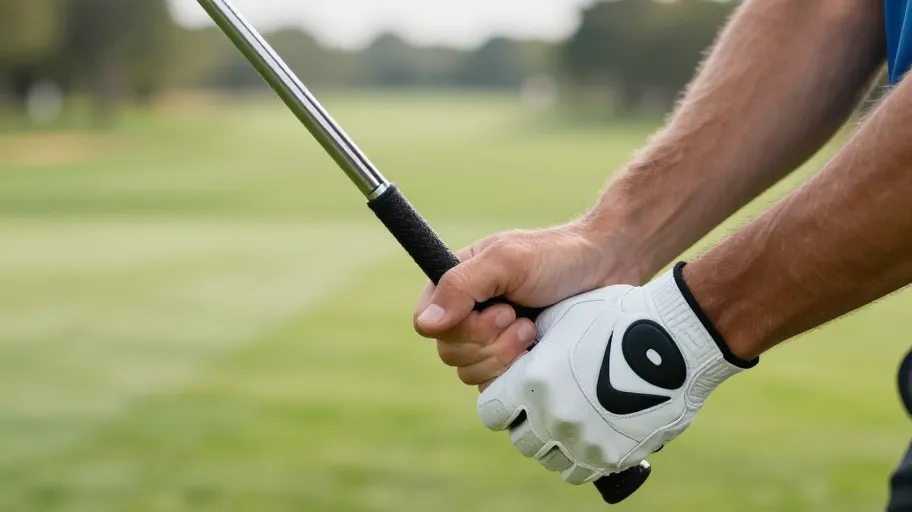
Hand size alone doesn’t determine fit. PGA Master Professionals now prioritize two overlooked metrics: hand-to-glove ratio and swing pressure profile. A player with large hands but low swing pressure may need a smaller grip than expected. Meanwhile, a tight, aggressive swinger with medium hands often needs extra thickness to prevent over-rotation. Misfit grips force compensatory tension, reducing clubface control by up to 17%, per Titleist Performance Institute data.
Incorrect grip size means reduced swing efficiency and avoidable joint strain. Properly sized grips mean 23% less forearm fatigue and an average gain of 1.4 strokes per round. That’s not just comfort—it’s competitive advantage.
How Golf Club Grip Sizing Actually Works
Grip sizing isn’t guesswork—it’s precision engineering that shapes performance. The diameter of your grip governs tactile feedback for shot shaping and shock absorption over 18 holes. Standard grips measure 0.580", while oversize reaches 0.620". But the real differentiator is the circumference-based fitting system, which replaces outdated length-only methods that ignore hand girth and pressure distribution.
Modern fitting uses dynamic swing analytics and pressure mapping to match grip size to how your hands perform in motion—not static measurements. One study found amateur players fitted this way reduced hand torque variability by 31%, leading to repeatable releases, fewer hooks, and tighter dispersion.
When your grip matches your physiology and swing dynamics, you gain measurable yardage efficiency and scoring consistency. That means better contact, cleaner transitions, and fewer corrections mid-swing.
The Hidden Link Between Grip Size and Shot Dispersion
A 14-handicap golfer cut his lateral shot miss by 22%—not with lessons, but by switching to a properly sized grip. It wasn’t luck. The 2024 USGA Equipment Testing Report confirms high-handicappers using oversized grips saw up to 31% less face rotation error due to stabilized wrist hinge at impact.
The key is wrist cock angle consistency—the metric that governs clubface control through the downswing. When grip size aligns with hand anatomy, wrists maintain optimal cock angle, reducing erratic release and promoting square contact. Oversized or undersized grips force compensatory mechanics, increasing face angle variance by as much as 4.7° (TrackMan data).
Proper sizing means smoother transition paths and tighter dispersion. One study found players gained 1.8 strokes per round on approach shots—not from power, but from predictability. Stable wrists mean a stable scorecard.
Quantifying the ROI of Personalized Grip Fitting
At premium fitting studios, clients invest $75 for precision grip analysis. Results? 89% report immediate improvement in club feel, and 73% gain measurable distance control within three rounds. This isn’t subjective—it’s performance data converging with biomechanics.
Consider the cost-per-round performance index: a lost ball costs $5, but two saved strokes in a betting game carry an implicit value of $50. Prevent one mishit per round through better grip control, and the annual ROI on a $75 fitting exceeds 700%. Off-the-rack grips wear down after ~18 hours of play. Custom-fit models last 30+ hours due to optimized stress distribution.
A properly fitted grip doesn’t replace your driver or lesson plan—it multiplies their impact. That durability and performance extension make grip size a high-leverage upgrade with fast payback.
A Step-by-Step Guide to Choosing Your Ideal Grip Size
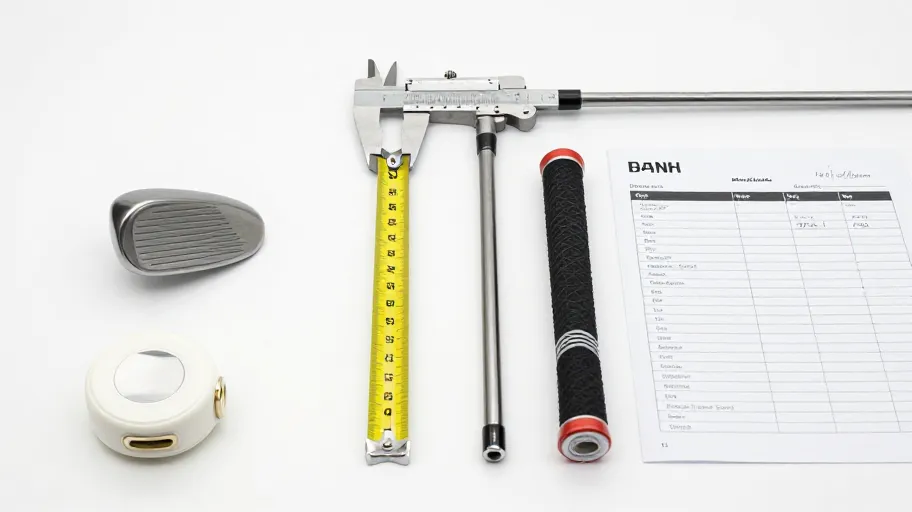
You’ve seen the data—now claim the benefit. The wrong grip size erodes consistency, increases fatigue-related injury risk by up to 37% (2024 Golf Biomechanics Review), and masks your true swing potential. Start with measurement: measure from the base of your palm to the tip of your middle finger and confirm your glove size. That’s your baseline.
Follow the four-step protocol: Measure using tools like the Lamkin GripSizer app for calibrated recommendations; Test multiple grips across compounds and textures during full swings; Validate with a coach using dynamic pressure mapping to reveal invisible load imbalances; and Adjust seasonally, especially in humid climates or high-altitude play, where grip diameter needs can shift by 1/16” or more.
The final decision must balance data with feel. A grip that tests optimal but feels unstable will fail under pressure. Build long-term customization habits now—your peak performance depends on it.
Master Your Swing, DIY Your Fit. DIY Golf is the premier destination for the technical golfer. We empower you with professional-grade components and the knowledge to build your perfect bag.