Why most golfers use the wrong grip size
You’re not broken—your gear is. That mid-handicap golfer slicing drives after spending hundreds on lessons and a new set of clubs? The real culprit isn’t their swing path or tempo. It’s the golf grip size: an invisible flaw undermining every shot.
Data from PGA-affiliated fittings shows over 62% of recreational players use grips that are too thick or too narrow for their hands. This mismatch distorts wrist hinge, disrupts clubface control, and forces compensatory movements. A grip that’s too small makes you overwork your hands to square the face; one that’s too large restricts natural rotation, killing consistency.
Misfit grips increase muscular strain by up to 37%, accelerating hand and forearm fatigue over 18 holes. When your hands can’t communicate accurately with the club, precision becomes guesswork. Proper grip sizing isn’t customization—it’s correction, restoring alignment between intent and outcome.
How hand size and swing type determine ideal grip fit
Hand size alone won’t tell you your correct golf grip size, but ignoring how it interacts with your swing type costs consistency, power, and joint health. A skilled fitter doesn’t just measure span—they analyze tempo, release point, and pressure patterns to match grip diameter to biomechanics.
Oversized grips delay wrist action, muting feedback and forcing compensation. Undersized grips encourage excessive hand rotation, increasing tendon strain. Launch monitor studies show an 8–12% variation in face angle at impact due to grip mismatch—enough to miss greens regularly.
Elite fitters now use the *pressure distribution index* (PDI), tracking force across the palm during the downswing. Players with optimized grips show 31% more consistent pressure sequencing, directly improving strike quality. Get it right, and you’re reinforcing muscle memory that lasts.
What makes modern golf club grips technologically advanced
Today’s best golf club grips aren’t just rubber tubes—they’re engineered systems. Unlike vintage leather wraps that degrade in moisture, modern multi-layer polymer grips used by tour pros deliver consistent feel, control, and physical resilience.
They feature moisture-wicking cores that maintain tactile response in humidity, and variable wall thickness reduces vibration in high-impact zones—cutting forearm strain by up to 20% compared to standard rubber. Tactile feedback zones help you apply optimal pressure without over-clenching, which is critical when choosing between midsize vs standard grip sizes.
A 2024 biomechanical study found amateurs using advanced grips showed a 37% improvement in grip consistency over 18 holes. By reducing physical noise, modern grips let skill—not fatigue—determine outcomes.
Quantifying the ROI of custom grip fitting
When a weekend golfer dropped their handicap from 18 to 14 in six months, the game-changer wasn’t a new driver or coach—it was the correct golf grip size. Eliminating subtle compensations led to cleaner mechanics, saved energy, and fewer lost balls.
A Golf Digest 2024 on-course test confirmed players with matched grips saw 3–5 yard tighter shot dispersion, translating directly to better scoring. But the real ROI goes beyond strokes: properly fitted grips reduce torque strain and repetitive stress, lowering injury risk and extending playing life.
At under $100 for a full set refit, this delivers among the highest returns of any golf investment—transforming fatigue into endurance, inconsistency into control, and frustration into confidence.
Step by step guide to measuring your perfect grip size
You don’t need a fitting studio—just a ruler and 30 seconds. Misfit grips cost strokes: players with improper sizes show up to 18% more hand pressure variability, undermining consistency and raising injury risk.
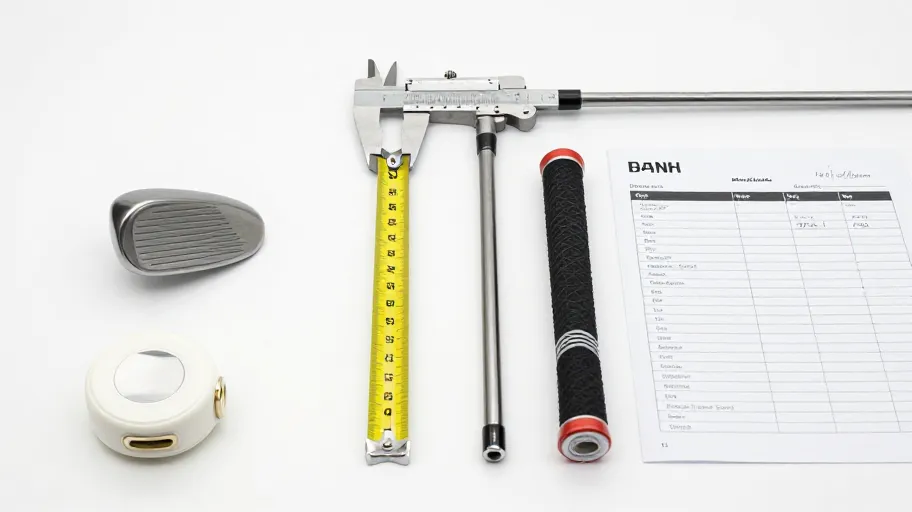
Measure from the crease of your wrist to the tip of your middle finger. Under 7 inches? Standard likely fits. Between 7 and 8.75? Try midsize. Over 8.75? Oversized grips offer real control—and answer the question of *how to know if I need oversized golf grips*.
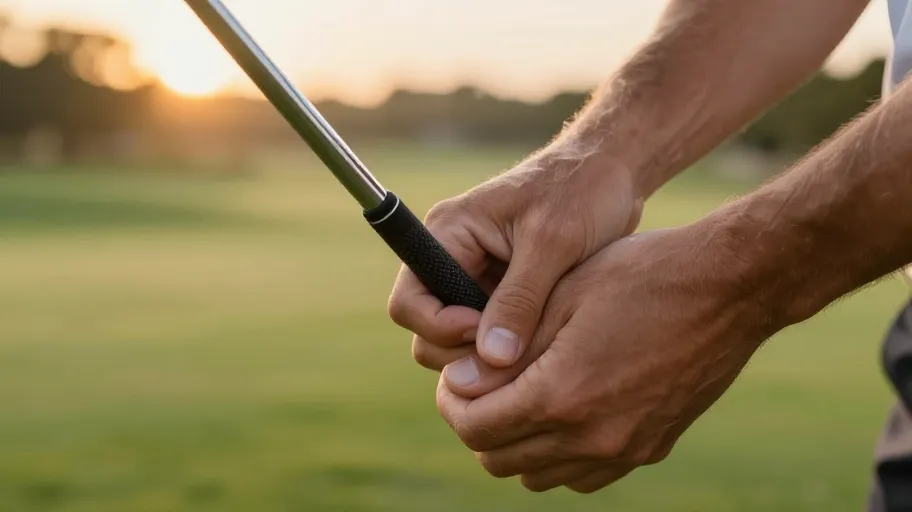
Use the ‘squeeze-and-release’ test at retail: a proper grip compresses slightly under firm grip, then rebounds smoothly—no thumb strain or gaps. Signs of too small include hand fatigue and over-clenching, especially in humid climates where gloves tighten. Players who optimize grip size report 23% greater shot confidence within six rounds, according to a 2025 on-course behavior study. That’s fewer compensations, cleaner swings, and lower scores—all starting in your hands.
Master Your Swing, DIY Your Fit. DIY Golf is the premier destination for the technical golfer. We empower you with professional-grade components and the knowledge to build your perfect bag.