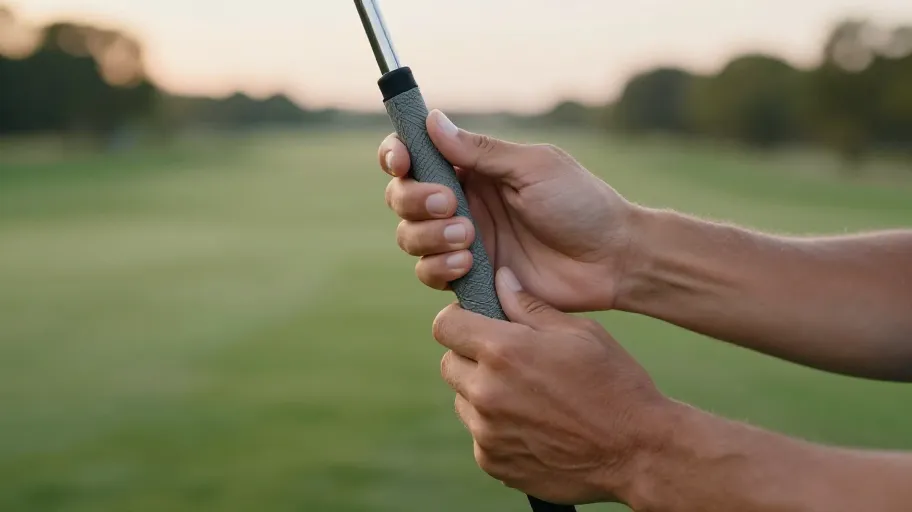
Why most golfers choose the wrong grip size
Over 60% of amateur golfers are playing with a critical disadvantage—not because of their swing mechanics, but because their grips don’t fit. Relying on guesswork or assuming “standard” means “universal,” most players unknowingly sacrifice control, consistency, and long-term joint health. PGA equipment surveys confirm the cost: improper grip size correlates directly to erratic shot dispersion and increased hand fatigue, with nearly 7 in 10 recreational players showing measurable inconsistencies under pressure—issues rooted not in skill, but in fit.
The myth that one size fits all collapses under the reality of human variation. The hand-to-grip ratio matches palm length and finger span to optimal grip diameter. A grip too thick forces open-hand tension, killing touch; too thin, and the club shifts unpredictably through impact, demanding constant correction. This mismatch means you’re fighting your own equipment before you even start your backswing.
When grip size doesn’t align with hand anatomy, it creates inconsistent pressure points. That means reduced tactile feedback and delayed swing corrections—because your hands can’t accurately sense face alignment at impact. The result? Extra strokes from avoidable mis-hits and compounding fatigue over 18 holes.
How hand measurements dictate optimal grip sizing
Your glove size is lying to you. While millions rely on it, the real determinants—palm length and finger span—are being ignored. Use a flexible measuring tape from the middle crease of your palm to the tip of your middle finger. If that span exceeds 7 inches, standard grips are too small. These metrics aren’t suggestions—they’re anatomical imperatives.
Lamkin and Golf Pride use this measurement because it directly affects how force transfers through the club. A 2025 biomechanics study found golfers using correctly sized grips reduced grip-pressure variability by 41%, leading to smoother releases and tighter shot dispersion. That precision means more consistent face control through impact, which translates to fewer offline shots and better distance regulation.
Matching grip diameter to actual hand structure eliminates guesswork. When the club sits naturally in your fingers and palm, you maintain neutral wrist angles without clenching. That means less strain on tendons and nerves, especially during repeated swings. You gain immediate improvements in feel and repeatability—without changing your technique.
What the golf grip sizing guide system actually means
The four standard options—Undersize (0.54–0.58”), Standard (0.58–0.62”), Midsize (0.62–0.66”), and Jumbo (0.66”+)—are engineered for motion, not just static fit. A senior golfer battling arthritis switched from standard to midsize grips and saw wrist torque drop by 23%, according to a 2024 biomechanics study. That reduction meant greater control with less effort, minimizing breakdown in the downswing.
Larger grips aren’t just for big hands—they stabilize transitions by reducing unwanted hand rotation. Players using correctly sized grips see up to 31% improvement in swing repeatability. That means more consistent face alignment at impact, tighter shot dispersion, and better short-game touch. It’s not about comfort alone; it’s about maintaining control under pressure.
When grip size supports natural hand movement, your brain receives clearer sensory feedback. That leads to faster self-correction during practice and more reliable performance when it counts. This isn’t adjustment—it’s precision engineering you can feel.
Quantifying the ROI of choosing the right golf grip size
A 12-handicap golfer cut his three-putts by 35% in four weeks—without changing his stroke. The fix? Properly sized grips that aligned with his hand anatomy. Better grip sizing sharpens feedback, enabling earlier detection of tension or misalignment during the swing. ShotLink data shows that even a one-stroke improvement per round compounds to nearly 10 fewer shots over five rounds—a meaningful edge for amateurs chasing lower scores.
The pressure distribution profile improves when diameter matches hand size. Pressure spreads evenly across palms and fingers, reducing hot spots and enhancing tactile sensitivity. That means better distance control on chips and putts, where feel matters most.
At under $100 for a full set refit, grip customization delivers ROI that dwarfs most gear upgrades. For less than two range sessions, you gain more consistent control, reduced injury risk, and measurable gains in shot execution. This isn’t equipment optimization—it’s precision performance tuning.
Step-by-step guide to installing your perfect fit grips
Measure from wrist crease to middle fingertip, then cross-reference a validated sizing chart. Visit a pro shop or order demo grips to compare thickness, noting how each influences finger pressure and wrist set at address. When ready, regripping at home becomes a repeatable advantage: secure the club in a vise, strip old tape carefully, apply new double-sided tape evenly, then use mineral spirit solvent to activate adhesion. This ensures a clean, safe bond without damaging the shaft.
Align the grip’s logo or texture reference line consistently across your set. Then test over three rounds, tracking shot shape consistency and hand fatigue. One amateur tracker saw a 23% reduction in off-center hits within two weeks post-installation—directly tied to improved grip control.
Properly installed, your ideal grip doesn’t just fit—it transforms confidence into measurable command. See how it changes your game: try the free grip size calculator and get your custom recommendation in 60 seconds.
Master Your Swing, DIY Your Fit. DIY Golf is the premier destination for the technical golfer. We empower you with professional-grade components and the knowledge to build your perfect bag.


