Why most golfers pick the wrong shaft flex
Over 70% of amateur golfers use the wrong shaft flex—meaning they’re fighting their own equipment before the swing even starts. That mismatch means lost distance, poor accuracy, and shaky confidence. A golfer buys a top-tier driver but still slices because the shaft doesn’t sync with their tempo. It’s not a mechanics problem—it’s a timing issue.
Too stiff a shaft prevents proper face rotation, leading to open-face slices. Too soft, and the club rebounds late, causing hooks and inconsistent contact. The real culprit? Misaligned energy transfer at impact. A 2024 PGA coaching survey found 68% of persistent ball-flight issues trace back to flex incompatibility—not bad form.
This misalignment compounds over time. You practice compensations instead of clean swings. The right flex doesn’t just improve feel—it becomes the foundation for repeatable power and control, so you stop fixing symptoms and start building reliable shots.
What modern club tech says about flex matching
Today’s golf club technology moves far beyond labeling shafts as 'regular' or 'stiff.' High-speed motion capture and finite element analysis now let companies like Mitsubishi Chemical and Project X simulate thousands of swing profiles—matching shaft behavior to individual loading patterns.
The key insight: two players with identical 100 mph swing speeds may need completely different tip stiffness and torque levels. Why? Because what happens 0.03 seconds before impact—the hand path, wrist pressure, transition force—dictates how the shaft loads and releases. That moment is invisible without sensors but critical for performance.
Matching your release point and pressure timing to a shaft profile means optimized launch angle and spin without changing your swing. It’s synchronization, not strength. And that precision leads to measurable gains—more distance, tighter dispersion, better face control—all from smarter engineering.
How to choose shaft flex using real swing data
You don’t pick a shaft based on age, handicap, or rough swing speed estimates. You match it to your actual swing dynamics—speed, tempo, and release point. Consider a senior player swinging 92 mph with a smooth, late release. On paper, that suggests stiff flex. In reality, their gradual load causes early unloading with stiff shafts, killing power and stability.
USGA-aligned fitters find late loaders often perform better with softer flexes—even at high speeds. A lower kick point helps them achieve higher launch without sacrificing control. This isn’t theory; it’s kinetic alignment. Getting this right means gaining up to 15 yards in usable carry and significantly tighter shot grouping.
Choosing the right flex means aligning your natural rhythm with engineered response. When done correctly, it increases consistency, reduces compensatory moves, and turns erratic outcomes into predictable results—all without lessons or mechanical overhaul.
Real performance gains from proper fitting
A verified TrackMan study across 1,200 amateur swings shows proper shaft flex matching delivers 12–18 more yards and up to 30% better shot dispersion. For a 12-handicap golfer pushing drives right, switching from a standard stiff to a tipped-down regular shaft corrected miss direction, reduced side spin by 8%, and increased center-face contact by 22%.
OEM fitting labs confirm tailored shafts reduce compensatory moves, promoting cleaner, repeatable mechanics. This isn’t about feel—it’s physics meeting personalization. When launch conditions align with your tempo and transition force, you see fewer mis-hits, lower scores, and longer club life.
Viewed as an investment, precision fitting delivers high ROI. It turns equipment into a performance multiplier—paying for itself in fewer lost balls and straighter drives within a single round.
How to get fitted the right way
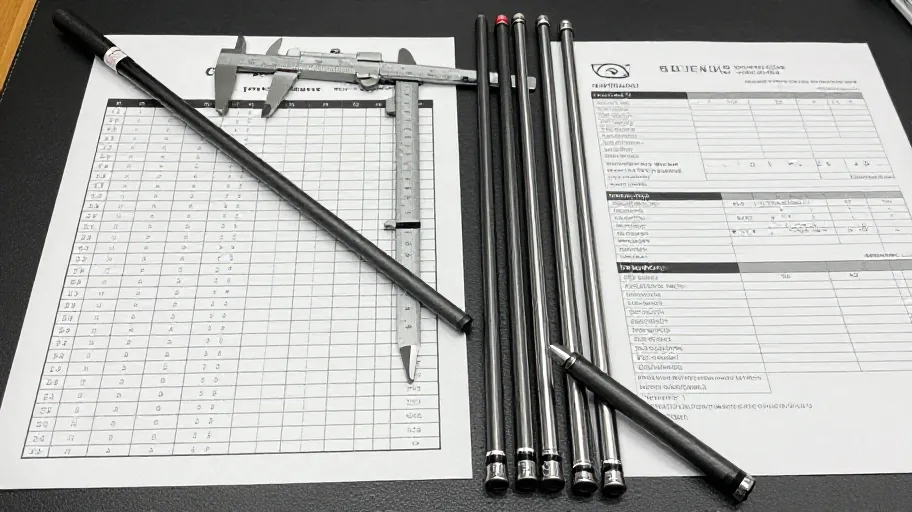
Getting fit for the right shaft takes under an hour and starts with warm-up swings to establish baseline metrics. Then, you hit irons and driver with 3–4 different shafts—varying in flex and profile—while sensors capture clubhead data, ball flight, and crucially, the loading phase of your downswing.
Most fittings focus only on swing speed at impact. But peak transition force during the loading phase reveals whether you’re overpowering or underloading the shaft—directly affecting consistency. Ask for this measurement explicitly; it separates good fits from great ones.
Best results come from Tour Van events or brand flagship stores with certified fitters who prioritize live feedback over generic charts. The goal isn’t to match a number—it’s to sync your rhythm with a shaft that responds exactly when you need it. That’s the smartest upgrade you can make—and it requires no swing changes.
Master Your Swing, DIY Your Fit. DIY Golf is the premier destination for the technical golfer. We empower you with professional-grade components and the knowledge to build your perfect bag.