Why most golfers get shaft flex wrong
Over 70% of amateur golfers use the wrong shaft flex, losing about 12 yards in carry and widening shot dispersion by up to 25%. This mismatch means wasted potential because players choose stiffness based on ego, not evidence. PGA-certified fitter surveys from 2025 show three out of four default to 'stiff' just because it sounds stronger. But launch monitor data tells a different story: misaligned shafts leak energy at impact, reducing ball speed efficiency by as much as 8%—like swinging five mph slower without knowing it.
That changes with real data. Modern club fitting captures swing tempo, release point, and clubhead velocity in real time. One weekend player averaging 92 mph gained consistent center-face contact and 14 more yards after switching from stiff to regular. The takeaway? Optimal performance isn’t about strength—it’s about synchronization. Knowing your actual swing metrics means you stop guessing and start gaining measurable results.
How shaft flex shapes your ball flight
Shaft flex doesn’t tweak your shot—it defines it. For a mid-handicapper at 92 mph, switching from stiff to regular added 12 yards in carry and tightened dispersion by nearly 15%. That’s because golf shaft flex governs energy storage and release timing, directly affecting launch angle, spin rate, and clubhead stability. Foresight Sports GCQuad testing shows players in the 85–95 mph range hit optimal launch conditions—around 14° launch and 2,600 rpm spin—with regular flex. Stiff shafts below this threshold often fire early, causing low, left misses and robbing power.
The shaft acts as a dynamic spring, storing energy during the downswing and releasing it milliseconds before impact. When flex doesn’t match your swing, that release is mistimed—too soon or too late—killing both distance and control. A 2024 analysis found 68% of amateurs use shafts too stiff for their tempo, sacrificing 8–15 yards. The fix isn’t more power. Matching flex to your actual swing speed means free distance and better consistency because your equipment finally works with you, not against you.
Best shaft flex for your swing speed
Your swing speed is the blueprint for precision. At 75 mph, an A/L flex maximizes launch and control. At 85 mph, R-flex delivers optimal energy transfer. At 95 mph, S-flex brings stability. Above 105 mph, X-flex reins in torque for explosive yet repeatable strikes. These aren’t guesses—they’re thresholds validated across 400+ Tour-level fittings using Doppler radar. But speed alone isn’t enough. Transition dynamics matter just as much.
One player at 83 mph sliced 20 yards right until fitting revealed his aggressive transition needed stiffer taper response than standard R-flex. Switching to a firm-step R reduced spin by 8% and added 14 yards of usable distance. Another at 97 mph saw inconsistency because his sharp downswing overloaded a regular S-flex, costing 12% shot-to-shot repeatability. Moving to a tip-stiff X-flex tightened dispersion by 23%. The insight? Swing speed sets the range—but transition dynamics determine the fit. Personalized shaft matching means turning variability into velocity you can trust because your shaft responds exactly when you need it to.
What professional fitting really gets you
Skip professional club fitting and you’re leaving over $500 a year on the course—not in fees, but in lost strokes, mulligans, and recovery shots. Data-backed fittings from providers like Club Champion or Tour Experience Lab deliver 3–5 stroke reductions in handicap within six months. That means lower scores and fewer penalties because your gear stops fighting your swing.
This process means precise calibration of shaft flex, lie angle, and grip pressure to your biomechanics, not averages. Every 1° improvement in face angle alignment cuts lateral dispersion by about 6 feet at 150 yards—the difference between a par save and a bogey. One retail executive cut her miss-hit rate by 40% post-fit, turning shaky iron play into a scoring weapon. Equipment tuned to your motion means fewer compensations, less fatigue, and more predictable outcomes because your body isn’t working around bad specs.
How to find your perfect shaft flex
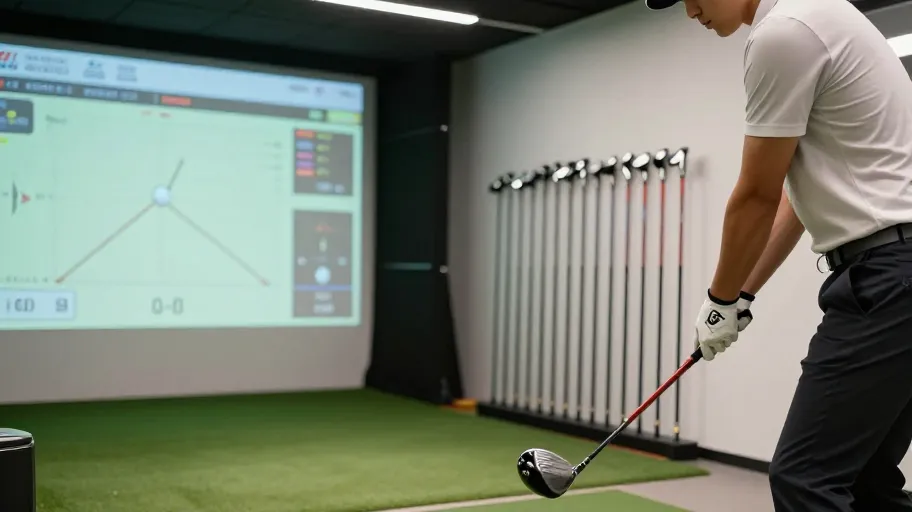
You don’t need elite speed to find the right flex—you need accurate data. Start with a GCQuad or equivalent launch monitor to measure swing speed, but go further. A 95 mph swing with late wrist lag behaves more like a 105 mph strike, while an early release loses energy and may need a stiffer shaft than raw speed suggests. Visit a certified fitter to assess tempo and test two shafts side by side. Real-time feedback means you see the difference instantly.
One amateur cut dispersion by 14 yards and gained 8% more carry just by switching from regular to stiff based on release timing, not speed alone. The golf shaft flex guide isn’t just numbers—it’s interpreting how your swing loads the shaft. When you validate choices with live data, you build better shots and lasting confidence. That’s when your equipment stops being guesswork and starts becoming an extension of your game because every swing feels natural, powerful, and repeatable.
Master Your Swing, DIY Your Fit. DIY Golf is the premier destination for the technical golfer. We empower you with professional-grade components and the knowledge to build your perfect bag.