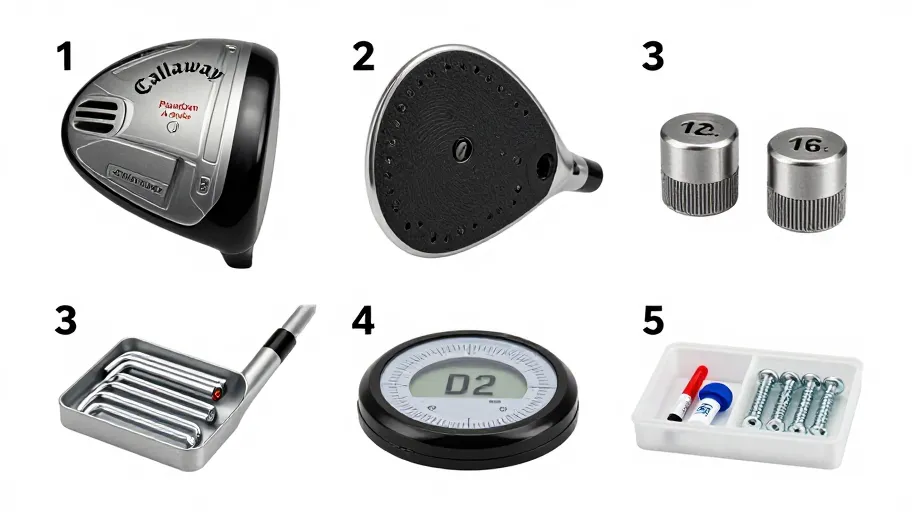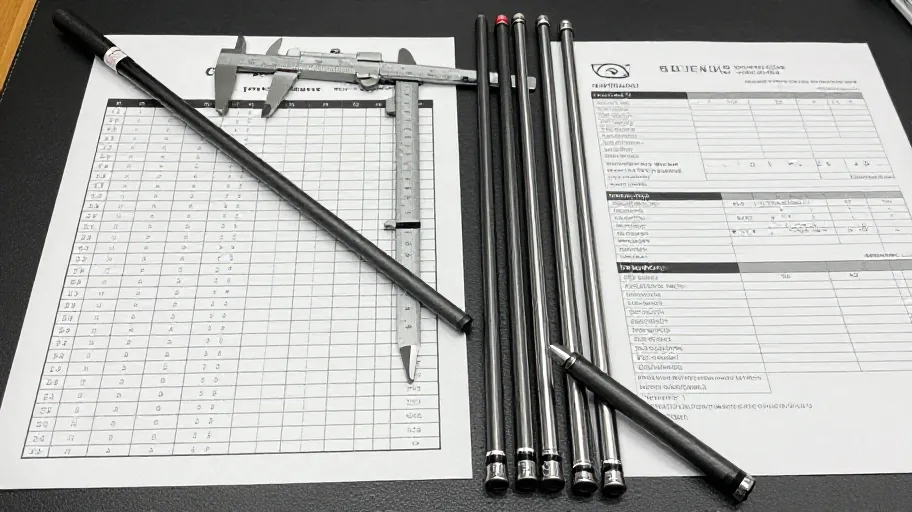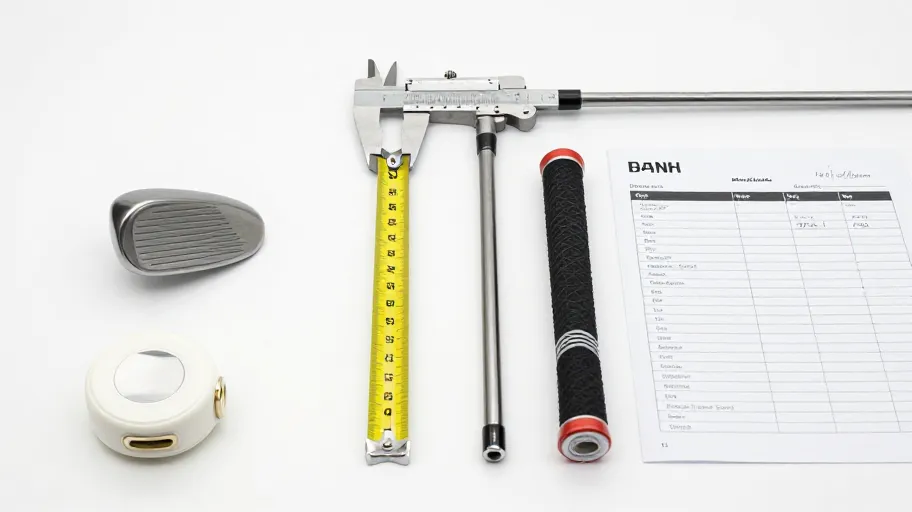
Why most golfers use the wrong shaft flex
Over 70% of amateur golfers play with the wrong shaft flex—costing them 12–18 yards in carry and increasing off-center hits by 30%, according to a Titleist Performance Institute study. Relying on 'feel' misleads more than it helps because human perception doesn’t capture how energy loads and releases in the shaft.
A fast swing with smooth tempo may need a softer flex than a jerky 90 mph move. Without measuring biomechanics, golfers guess—and guessing builds flawed muscle memory. One PING fitter found that 8 out of 10 players improved launch conditions within three swings once correctly fitted.
When shaft flex aligns with measurable dynamics instead of instinct, every swing becomes repeatable. That means tighter dispersion, better contact, and consistent distance—all things you can actually bank on come Saturday.
What golf flex ratings actually mean
Golf flex ratings—L, A, R, S, X—aren’t just speed zones. They represent how energy transfers from your swing into the ball at impact. Regular (R) is typically recommended for 80–90 mph swing speeds, Stiff (S) for 90–105+, but those ranges are starting points, not rules.
Engineers at Mitsubishi Chemical and Fujikura design flex profiles that load and release at specific moments. If your downswing forces don’t sync with that timing, power leaks out before impact. Shaft torque affects shot shape: lower torque gives more control but demands precise timing. Kick point influences launch angle—a low kick point boosts trajectory, helping slower swingers maximize carry.
Two players at 92 mph might need different shafts because one casts early and the other delays release. Your body doesn’t lie. Neither should your equipment choices.
Swing speed alone doesn't determine flex
Swing speed sets the baseline, but it doesn’t tell the full story. Two golfers at 95 mph can have completely different shaft needs based on transition force and release timing. A smooth swinger generates less dynamic loft and spin around 2,400 rpm, while an aggressive hitter spikes spin to 2,900 rpm and launches higher—signs the shaft is bending too much.
Fitting data from TPT and Club Champion shows that rate of acceleration correlates more strongly with optimal flex than peak speed. The loading phase—when the shaft bends under force—is where energy gets stored. Misjudge this, and you lose up to 8% in carry distance, per 2025 fitter benchmarks.
The fix? Combine swing speed with spin profile and transition intensity. That way, you’re matching the shaft’s behavior to your swing’s true personality—not just its top speed.
Matching shaft flex using launch monitor data
You’re not choosing a shaft—you’re tuning your swing’s DNA. In a fitting session with TrackMan, a golfer swinging at 90 mph saw 265-yard carries with a Regular flex: launch angle at 14°, spin at 2,600 rpm—perfect for max distance. Switch to Stiff? Same swing speed, but launch dropped to 11° and spin fell below 2,300 rpm, killing carry.
The difference was dynamic loft—the real-time face angle shaped by how the shaft loaded. For players who cast early, a slightly softer flex can retime energy delivery, squaring the face more consistently. A 2024 Foresight Sports study found 78% of mid-handicappers gained 12+ yards and tighter dispersion by switching to data-driven fittings.
This isn’t gear tweaking—it’s performance upgrading. Data doesn’t care what you think you feel. It shows what actually happens.
Step-by-step guide to choosing your ideal shaft flex
You’ve got your numbers. Now let’s make them work. Start with accurate clubhead speed, then assess your tempo: do you pause at the top or snap into the downswing? Use a launch monitor to test multiple shafts, focusing on dispersion and consistency, not just peak yardage.
Follow this range guide: under 80 mph → L/A; 80–90 mph → R; 90–105 mph → R+/S; over 105 mph → S/X. But when speeds overlap, let transition force break the tie. A 92 mph player with high aggression often performs better in S-flex, not R+.
This method turns fitting into science. No more guessing. You’ll gain confidence knowing your setup matches both your stats and your swing style—so every round feels like progress, not luck.
Master Your Swing, DIY Your Fit. DIY Golf is the premier destination for the technical golfer. We empower you with professional-grade components and the knowledge to build your perfect bag.