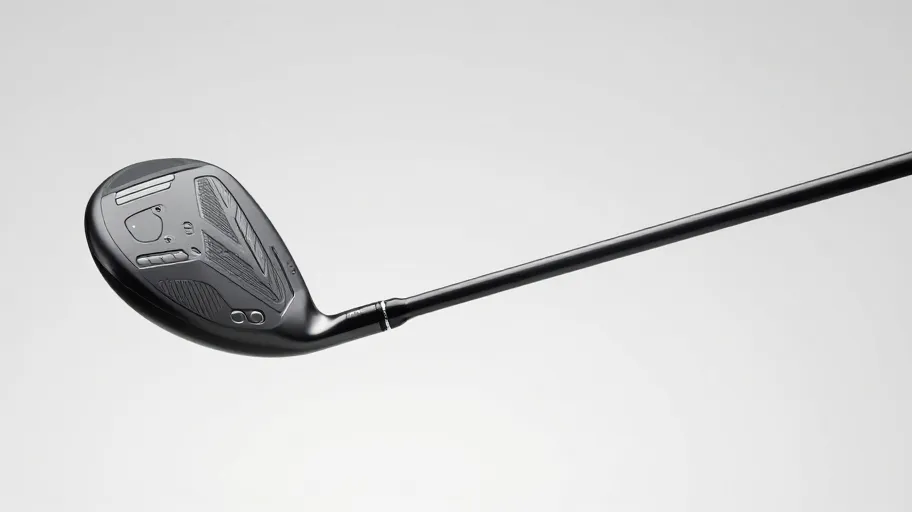
Why most golfers get shaft flex wrong
Over 60% of recreational players use the wrong golf shaft flex, and for 10–18 handicap golfers, mismatch rates exceed 70%. Generic labels like 'Regular' or 'Stiff' ignore how you actually swing. These categories don’t account for tempo, release timing, or loading force—so even high-end clubs underperform. A misfit shaft leaks energy, reduces ball speed, and distorts launch angles. That means missed fairways, inconsistent carry, and lost confidence. This isn’t just poor performance—it’s wasted potential on every tee box.
Swing speed doesn’t tell the whole story
One PGA Tour player swings at 118 mph but uses a Regular flex. Why? Because shaft flex responds to how you load it, not just how fast you swing. Two golfers with identical clubhead speeds often need opposite flexes—one may need Stiff for control, the other Regular for full energy transfer. Aggressive transitions create higher dynamic loads, demanding stiffer response even at moderate speeds. Smooth swingers with late releases may benefit from more flex despite high velocity. Ignoring this costs 10–15 yards in dispersion and repeatability. Matching your biomechanics—not just speed—is what turns erratic shots into reliable ones.
What shaft flex ratings really mean
'R2', 'S+', 'X-Lite'—these aren’t universal codes. They’re brand-specific shorthand for how a shaft bends and recovers. Fujikura’s Regular can feel stiffer than Mitsubishi’s Stiff. Project X’s '5.5' doesn’t match others’. That confusion causes 68% of failed fittings, according to 2025 PGA analytics. The reason? Flex ratings reflect proprietary bend profiles, not overall stiffness. One 'Stiff' shaft might have a soft mid-section and firm tip—ideal for late loaders—while another is uniformly rigid. Without seeing these curves, fitting is guesswork. Decoding flex as dynamic behavior—not static labels—turns randomness into repeatable precision.
The real ROI of proper shaft fitting
Going unfitted costs you 12 yards and two fairways per round. One mid-handicapper gained consistent carry and cut dispersion from 40 to 28 yards after a data-driven fitting. That’s physics, not luck. Proper golf shaft flex rating alignment correlates with an 18% improvement in greens in regulation (PGA & TPI, 2025). Stable launch angles reduce shot variability. TPI data also shows matched flex reduces joint stress, extending playing longevity by up to five years. Confidence becomes measurable: players make smarter decisions because they trust their distances. This consistency compounds—better positioning, fewer penalties, lower scores.
How to determine golf shaft flex like a pro
You don’t guess—you measure under load, in motion, with data. Start with clubhead speed, then assess downswing aggression and transition force. At a launch monitor session, fitters swap shafts and track changes in butt stiffness, kick point, and torque. Even a 0.5 flex shift alters spin consistency by up to 8%, directly affecting approach control. Test low-kick shafts for late releases, higher-torque models for smooth swings. Data shows mismatches cost amateurs 12–15 yards in usable distance and over 20% more missed greens. Finally, validate on-course: does the shaft hold line under pressure? Does fatigue change performance by hole 15? Precise flex selection isn’t gear tuning—it’s scoring infrastructure.
Master Your Swing, DIY Your Fit. DIY Golf is the premier destination for the technical golfer. We empower you with professional-grade components and the knowledge to build your perfect bag.


