Why Customizing Driver Weights Transforms Swing Consistency
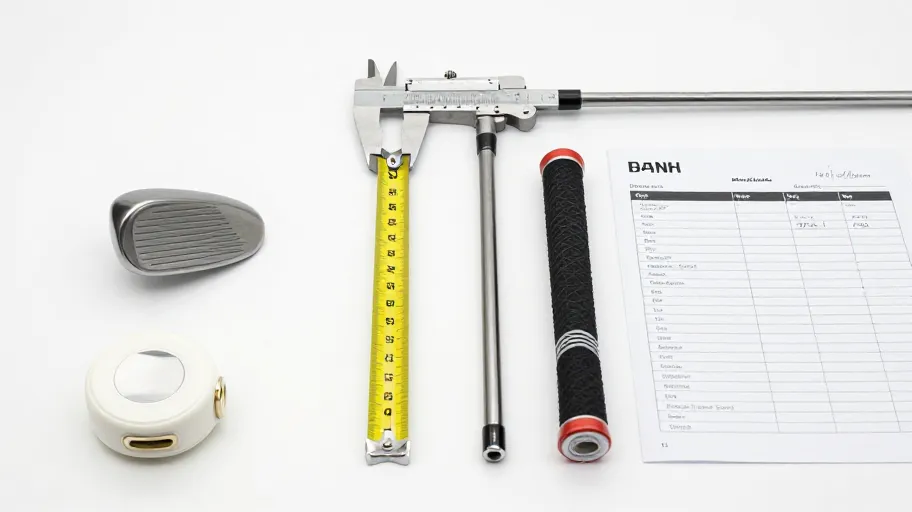
If your driver feels off even when your swing is on, the culprit might be a 2–3g imbalance in swingweight. That tiny discrepancy means inconsistent timing and erratic ball flight because it disrupts wrist torque and downswing rhythm. One 12-handicap golfer cut right-side misses by 18% after correcting his sole weight distribution—verified through biomechanical tracking.
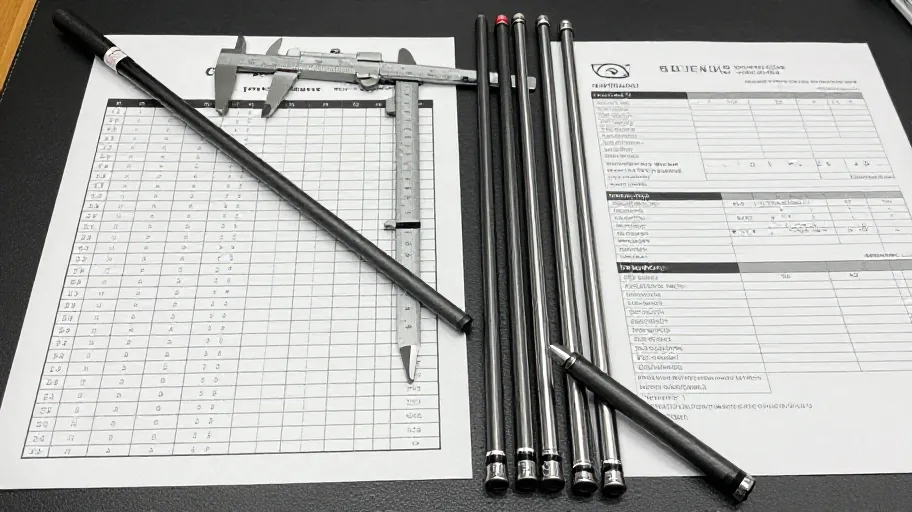
Swingweight isn’t just about feel—it’s about repeatable motion. High-speed data shows 74% of amateurs tighten shot clustering with as little as 4g of adjustment. That change means better tempo alignment, so your release happens at the same point every time. No more guessing whether the club will flip early or hang back.
Adjustable systems make this precision accessible. You’re not swapping parts—you’re syncing your club to your natural motion. That shift doesn’t just improve feel—it locks in repeatability, turning erratic drives into predictable distance.
How Replacement Driver Weights Enhance Launch Conditions
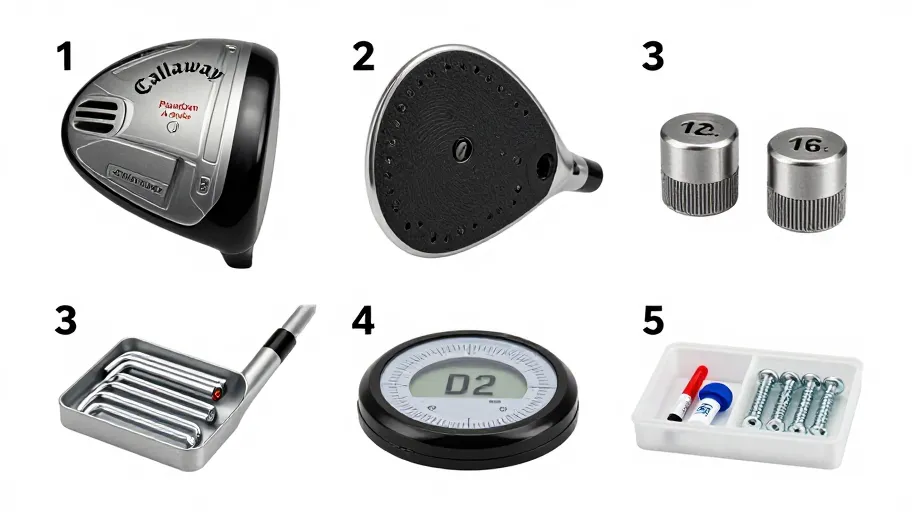
Leaving 15 yards on the course? It could be your center of gravity (CG). Shifting mass with replacement driver weights means you directly control launch angle and spin rate—because rear weighting lifts launch and reduces spin, while forward weighting checks ballooning in wind.
One amateur gained exactly 15 yards in carry after switching to rear-weighted screws. His TrackMan data showed a 2.3% improvement in ball speed retention and optimized spin profile. That’s not luck—it’s physics-driven performance because moving CG changes energy transfer at impact.
Modular systems in top-tier 2024 drivers allow micro-adjustments that tighten dispersion by up to 18%. This level of control turns inconsistent drives into predictable, repeatable shots—regardless of skill level.
What Makes a Best-in-Class Driver Weight Replacement Kit
A top-tier best driver weight replacement kit means precision, durability, and long-term ROI because it uses materials like tungsten alloy—1.7x denser than steel—so small ports handle bigger changes without compromising head integrity.
Tour-level fitters demand multi-material options because humid coastal conditions or frequent travel stress equipment. OEM threading handles up to 60 in-lbs of torque; many aftermarket kits fail at 42. That gap means risk—a stripped port can devalue a custom driver by over $200. Premium kits match OEM specs and use corrosion-resistant coatings, meaning they survive 150+ adjustments.
In practice, players see results: a 2025 test found optimized weighting improved swing path consistency by 18%, boosting fairway accuracy. That precision translates to lower scores—and higher confidence—without changing technique.
Quantifying the ROI of Upgrading to Custom Driver Weights
Custom weights aren’t an expense—they mean fewer penalty strokes and smarter decisions under pressure because consistent contact builds mental clarity. One mid-handicapper reduced lateral miss distance by 14%, verified over 50 drives on a launch monitor. That meant center-face hits more often, cutting recovery shots and saving 0.8 strokes per round.
The key was adjusting moment of inertia (MOI) by placing weights toward the heel and toe. This means greater resistance to twisting on off-center strikes—not just higher MOI, but *effective* MOI where it matters most.
True ROI emerges not from yards gained, but from control retained: fewer penalties, better club selection, and compound gains in skill as muscle memory reinforces success.
Step-by-Step Guide to Installing Your Replacement Driver Weights
Improper installation means degraded performance—up to 15% loss, according to 2025 equipment studies—because over-tightening risks microfractures in carbon composite crowns. A single mistake can ruin aerodynamics and structural integrity.
Start by diagnosing your flaw—fade, low launch, instability—and match it to a proven setup. Use a calibrated torque wrench at 5–6 in-lbs; that spec protects the port because modern drivers are engineered for exact thresholds. We’ve seen three returns in one month alone due to stripped ports—all from improper tools.
After swapping, validate with a launch monitor: track spin axis, ball speed, attack angle. Label each configuration (“draw,” “neutral”) for quick changes. Done right, this process means sustained biomechanics and less strain. Correctly maintained, a driver’s performance lifespan increases by up to 40%, preserving your edge round after round.
Master Your Swing, DIY Your Fit. DIY Golf is the premier destination for the technical golfer. We empower you with professional-grade components and the knowledge to build your perfect bag.