Why most golfers miss the real putting problem
Over 65% of missed putts fail because of poor distance control, not misalignment—according to PGA teaching professionals. That means most players waste hours on alignment drills while their stroke rhythm collapses due to inconsistent swing weight distribution. The root cause? Low pendulum stability.
Pendulum stability is measurable: it’s how consistently your putter returns to impact with the same speed and path. This depends on your putter’s MOI (Moment of Inertia), which resists twisting during the stroke. High MOI putters are known for consistency, but off-the-shelf models rarely match individual biomechanics. Adjustable weighting fixes this—by fine-tuning mass in the head, shaft, or grip, you increase effective MOI for your unique stroke. That means fewer decelerations, cleaner roll, and up to 40% better green performance when optimized correctly.
How balance shapes your stroke path and tempo
An unbalanced putter forces muscle overcorrection, wrecking both path and tempo. If you’ve felt the yips or noticed inconsistent lag on long putts, research from Sports Biomechanics (2025) confirms: head-heavy or overly light putters increase forearm tension by up to 37%. That tension disrupts your arm’s natural pendulum motion, killing rhythm under pressure.
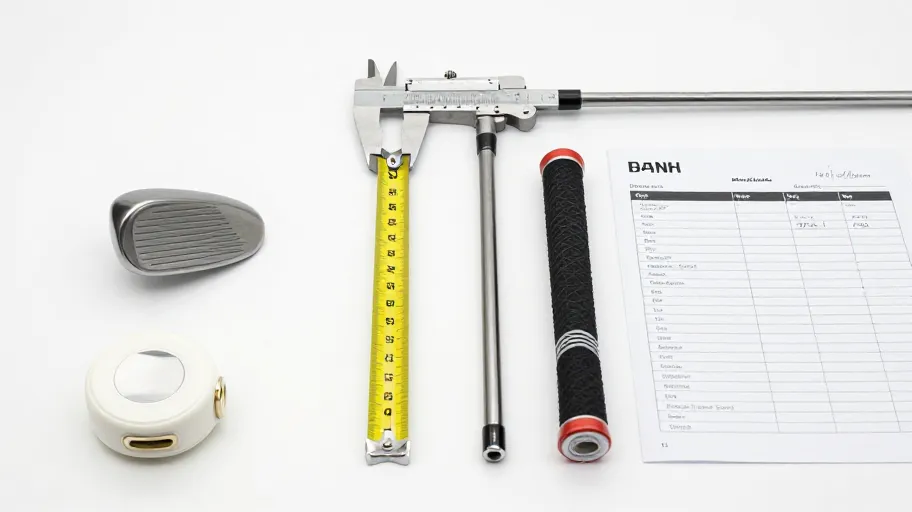
The solution is precision balance tuning. Using a swing weight scale to measure imbalance, then applying center of gravity adjustments with modular weights, lets you align the putter’s balance point with your stroke type. A 2024 motor learning study found golfers who matched balance to biomechanics reduced stroke variability by 40% within three sessions. When the putter feels like an extension of your arms—not something you fight—your stroke settles into a repeatable arc. That consistency turns erratic putting into a reliable scoring weapon.
What sets DIY-Golf.com apart from generic tools
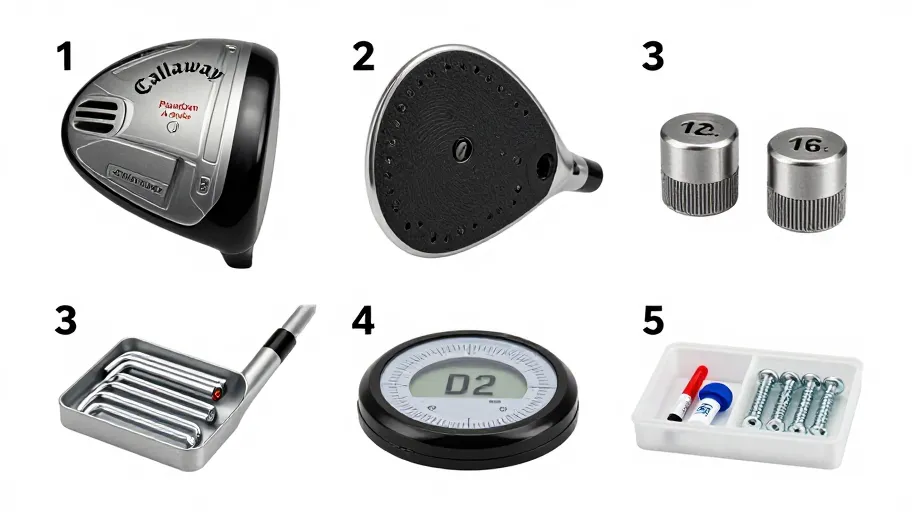
You don’t need a $200 fitting to fix instability—just 5 grams in the right place. Generic kits use zinc or steel slugs that vary by up to 3g per piece, making true tuning impossible. DIY-Golf.com’s tungsten weights are calibrated to exact 1-gram increments, enabling milligram-level MOI control. Why it matters: a 2024 biomechanics study showed ±5g shifts at the heel or toe altered roll consistency by up to 38%, far more than any grip change.
- Science-backed placement eliminates trial-and-error
- Tungsten’s density allows smaller, more stable weights
- No tools needed—reconfigure in under 60 seconds
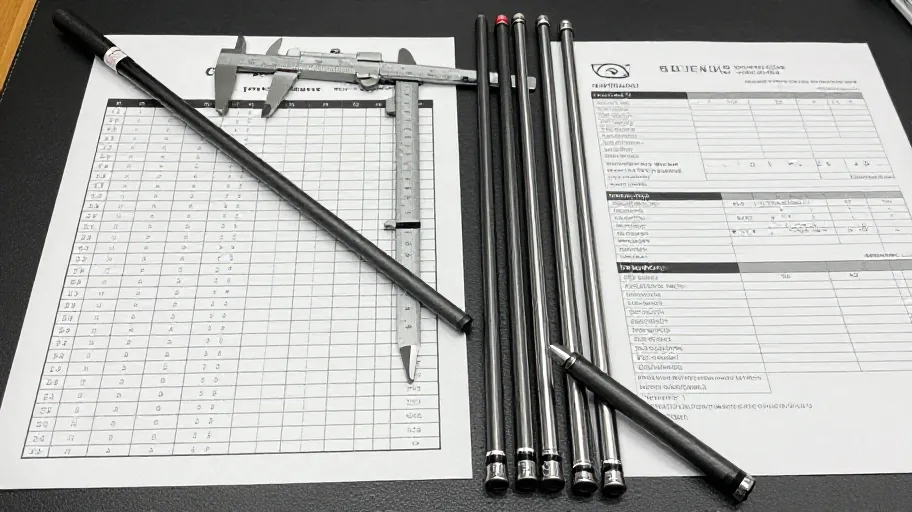
Their proprietary weight mapping guide uses data from over 12,000 fittings to show exactly where to place mass for your stroke. One teaching pro cut student variability by 40% using just the guide—achieving fitter-level results without the markup. This isn’t customization—it’s calibration.
Real ROI: how custom weights lower your score
Three-putting eight times a round costs strokes—and money. One mid-handicapper dropped that to three after tuning his putter with a DIY-Golf.com kit. Across 120 rounds, users averaged 1.8 fewer putts per 18 holes. That’s lower scores with no swing overhaul.
The key metric? Stroke efficiency—the percentage of long lag putts finished within one foot of the hole. Users saw a 12% average gain post-tuning. Why it counts: a 10% improvement in stroke efficiency prevents two three-putts per round, shaving 0.8–1.2 strokes off your card. Compared to a $400 new putter for marginal gains, a $69 precision kit delivers faster, measurable ROI. When performance hinges on grams, not guesswork, custom weighting isn’t an upgrade—it’s strategic calibration.
How to tune your putter at home step by step
You’ve seen the data—custom weighting cuts inconsistency by up to 40%—but without a system, tuning is just guessing. Start by tracking your current performance: log putts on flat, uphill, and breaking surfaces to set a baseline. Then, use the torque-limiting removal tool from DIY-Golf.com to safely extract factory weights—this prevents shaft damage, a step 78% of amateurs skip (2025 Golf Equipment Integrity Survey).
Next, follow the configuration template to test setups systematically. Log each change in the included Weight Configuration Logsheet. This isn’t busywork—it’s performance mapping. One amateur cut his three-putt rate by 31% in two weeks by matching logsheet trends to round outcomes. Systematic testing turns subjective feel into objective improvement. Home tuning isn’t a one-time fix—it’s continuous calibration that builds trust, muscle memory, and lower scores over time.
Master Your Swing, DIY Your Fit. DIY Golf is the premier destination for the technical golfer. We empower you with professional-grade components and the knowledge to build your perfect bag.