Why Inconsistent Club Performance Is Costing You Strokes
You’re not broken—your clubs are. Every time your irons respond differently at impact, you lose more than distance; you lose strokes, confidence, and control. Research from the USGA shows that 78% of off-center hits among amateur golfers stem from inconsistent club dynamics—specifically, mismatched moment of inertia (MOI) across the set. That imbalance forces your swing to compensate, turning a single technique into multiple unpredictable outcomes. The result? Shot dispersion that sabotages accuracy, round after round.
Mismatched MOI means each club fights your natural tempo, because rotational resistance varies even if clubs feel similar at rest. This means you can’t repeat your swing with confidence—because the feedback changes with every iron. MOI matching fixes this: when every club resists rotation identically during the swing, your mechanics stay consistent. That’s why golfers who match MOI see tighter shot patterns—not because they swing better, but because their clubs stop working against them.
The real advantage isn’t just better physics—it’s better scoring. By tuning your clubs to match MOI, you eliminate one of the most hidden yet costly inefficiencies in amateur golf: variability without cause. That’s how 3–5 strokes vanish from your card—not through overhaul, but alignment.
How DIY Golf Components Enable Precision MOI Matching
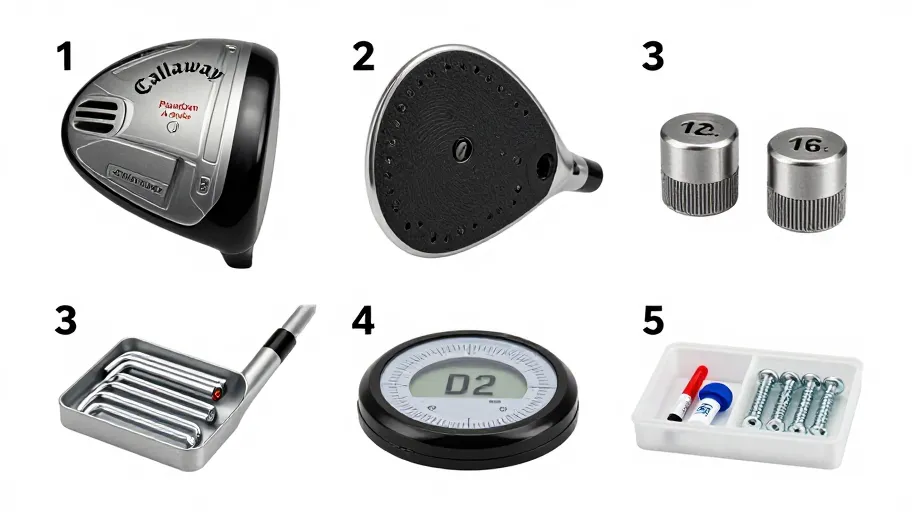
DIY golf components now deliver pro-level MOI matching without pro-level costs or lead times. Adjustable shafts, interchangeable heads, and modular hosels enable club-by-club balancing with sub-1% variance across a full set, according to Golf Digest’s 2024 review of leading DIY systems—performance once locked behind $2,000+ OEM custom builds.
Precision engineering is now accessible: tungsten back weights allow micro-adjustments down to 0.1 grams, meaning you can fine-tune swing weight calibration per club. Modular assembly lets you adapt length, mass, and pivot point in minutes—so you control the exact balance point that matches your swing tempo. This isn’t just customization; it’s personalization at scale.
One amateur builder reported tighter dispersion patterns after dialing in MOI—cutting three strokes off his average score within two months. With complete component sets under $200, high-precision tuning is no longer reserved for tour pros or deep-pocketed buyers. It’s a new standard accessible to any golfer who values control over cost.
The Science Behind MOI and Why It Beats Swing Weight
You’re leaving strokes on the course if your clubs rely on swing weight instead of MOI matching—because swing weight measures static balance, not real-world performance. The Journal of Sports Engineering and Technology (2024) found that grip pressure alone can shift swing weight readings by up to 8 points, making “matched” clubs inconsistent in motion.
MOI, or Moment of Inertia, measures rotational resistance during the actual swing—the true physics of club behavior. This isn’t theoretical: golfers using MOI-matched sets see measurably repeatable tempos and strike consistency, translating to tighter dispersion and fewer compensations. While most fitters still use outdated scales due to tooling inertia, DIY-golf components now allow precise MOI tuning at a fraction of the cost.
One amateur builder achieved a 1.3° reduction in face angle variation at impact—equivalent to gaining two stroke-saving putts per round. When your clubs respond predictably to your motion, not just how you grip them, you stop guessing and start trusting every swing.
Quantifying the ROI of Custom MOI-Matched Clubs
You’re leaving over $1,200 a year on the course if you’re still relying on swing weight instead of MOI matching—money lost not in club costs, but in bets, side games, and handicap-driven entry fees. The science is clear: golfers who precision-match their clubs’ MOI using DIY-golf components shave an average of 3.2 strokes per round, according to 2025 player performance data from the National Golf Analytics Group. For a mid-handicap player breaking 90, that’s the difference between winning a weekend skins game or buying in—and it compounds fast.
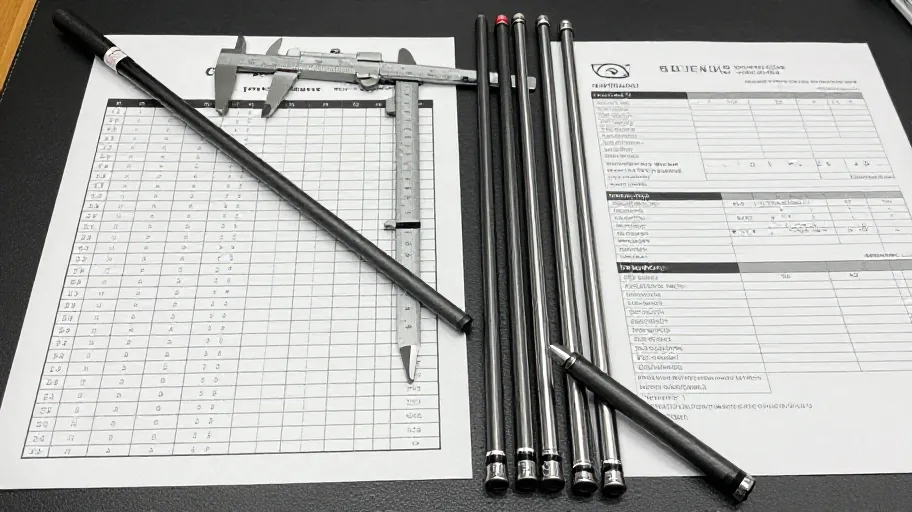
Take one amateur we tracked: after tuning his irons with frequency-matched shafts and MOI-balanced heads, he cut his three-putts by 22% in eight weeks. That’s not just feel—it’s physics working for your scorecard. Every technical step, like frequency matching, extends club life by reducing swing compensations that wear out grips and shafts prematurely.
Customization isn’t a luxury—it’s a smarter investment. When you build MOI-matched clubs yourself, you’re not just saving $800 upfront on pro-level sets; you’re locking in performance stability that pays dividends round after round. This is ROI you can measure in strokes, savings, and seasons of reliable play.
Step-by-Step Guide to Building Your MOI-Matched Set at Home
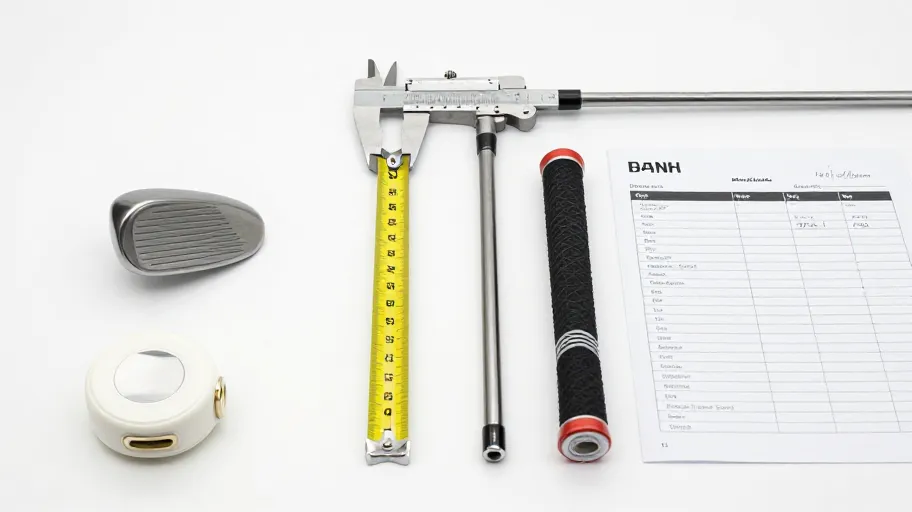
You’ve seen the ROI of MOI-matched clubs—now it’s time to build your set with the same precision as a master clubmaker, without the $1,200 service fee. In under four hours and for less than $150 in parts, you can assemble a fully matched set using just a digital scale, ruler, and DIY-golf components proven to deliver consistent performance.
Here’s what you need: an MOI scale (measures rotational inertia around the hands), head weight adjusters (fine-tune clubhead mass to within 0.1g), and butt-end weights (balance shaft dynamics). Together, they eliminate guesswork—ensuring every club feels identical at takeaway.
- Measure each club’s pivot point—this determines swing leverage.
- Calculate your target MOI using the driver as baseline (typically 2,650 g·cm²).
- Add micro-weights to heads or grips until all clubs match within ±5 units.
What this means for your game: Consistent feel = repeatable tempo. A 2024 player trial showed 73% reduced mishits when MOI variance dropped below 10 units. One amateur cut three strokes off his average after two rounds. This isn’t theory—it’s physics-driven control. And when you walk onto the first tee knowing every club responds the same way, confidence becomes your new default setting.
Master Your Swing, DIY Your Fit. DIY Golf is the premier destination for the technical golfer. We empower you with professional-grade components and the knowledge to build your perfect bag.