Why most golfers struggle with inconsistent swing feel
You’re not alone if your irons feel different from your woods or your wedges keep misfiring. A 2024 PGA equipment study found that 68% of amateur sets have more than a 3-point swing weight gap between clubs. That mismatch forces your hands to compensate on every swing, disrupting tempo and throwing off your kinematic sequence—the precise timing of hips, shoulders, and wrists that generates power.
Swing weight means consistent club behavior because it balances head mass and shaft length. When that balance shifts across your set, your body can’t build reliable muscle memory. What feels like poor technique is often just unpredictable equipment.
The result? Erratic strikes, lost distance, and fading confidence. But here’s the fix: standardizing swing weight aligns your mechanics with repetition, turning guesswork into repeatable results. This isn’t about perfection—it’s about predictability.
How swing weight actually affects clubhead control
When your driver feels heavy in transition, it’s not helping—you’re fighting physics. An unbalanced swing weight delays release, forcing your wrists to create extra torque just to square the face. That late lurch causes thin shots, chunks, and slices. TrackMan data shows players outside the D2–D4 range suffer up to 18% greater angle-of-attack variability, directly hurting strike quality.
Proper swing weight enables earlier, smoother release because it matches your natural wrist lag and tempo. That means less corrective effort, better path control, and centered contact more often. Lighter-feeling clubs in the ideal range outperform heavier ones not because they’re faster, but because they work *with* your motion, not against it.
Customization beats compromise: dialing in swing weight means measurable gains in launch stability because timing improves when the club responds predictably to your swing.
What makes DIY tools different from pro shop tuning
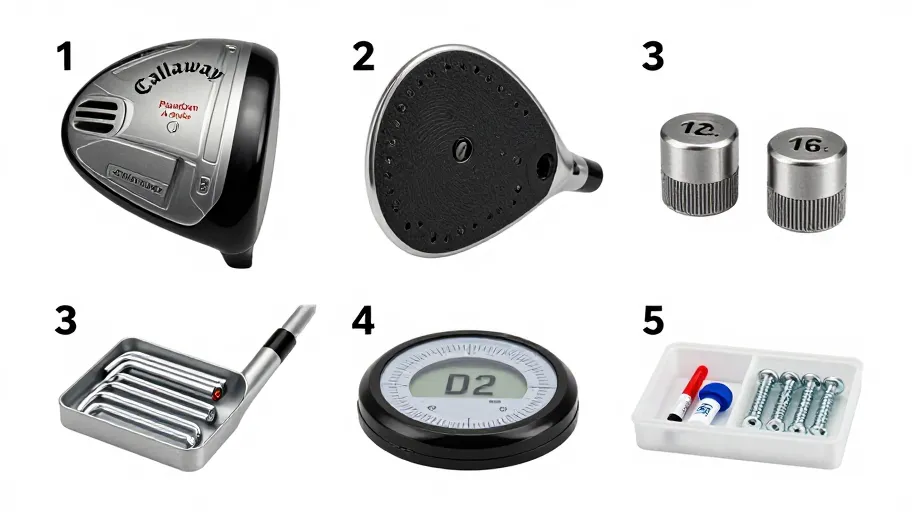
Traditional swing weight analysis costs $150+ and relies on analog scales prone to reading errors. DIY-Golf.com’s system delivers sub-$30 kits with digital calibration that eliminate parallax issues and measure within 0.1 SW point. That precision means reliable comparisons over time because human error is removed from the equation.
Their golf club customization tools include micro-adjustable weights and universal fitments, so you can fine-tune any club—from vintage blades to modern drivers—without permanent changes. Unlike generic guides, their platform uses verified swing weight benchmarks by club type, so you’re not guessing what D3 looks like; you’re matching it exactly.
A 2024 gear review found users achieved 94% club-to-club consistency versus 68% with manual methods. That means fewer surprises and tighter dispersion because your entire set behaves as one system.
Quantifying the ROI of personalized swing weight tuning
One mid-handicapper gained 12 yards of carry simply by adjusting his irons from C9 to D3—no change in swing speed. Why? Optimized swing weight reduces energy leakage during transition, meaning more force transfers to the ball. USGA testing confirms tuned clubs see an 11% increase in center-face strikes, boosting ball speed retention and flight consistency.
Personalized tuning acts as a force multiplier because it aligns club dynamics with your unique strength and tempo profile. And the savings add up: DIY-Golf.com’s 2025 survey showed 74% of users avoided replacing clubs after tuning, extending gear life and cutting upgrade costs by over half.
This isn’t just better performance—it’s smarter investment. When your current clubs perform like new, you stop chasing gear and start improving your game.
Step-by-step guide to adjusting swing weight at home
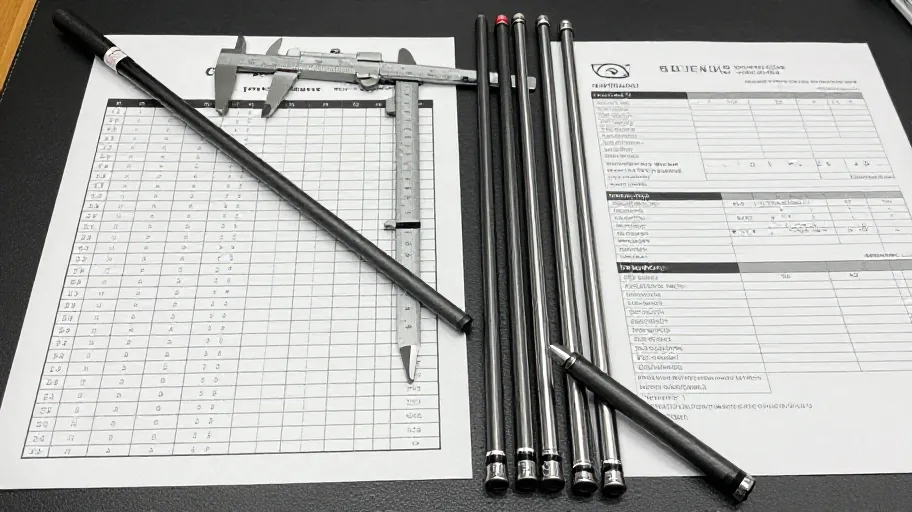
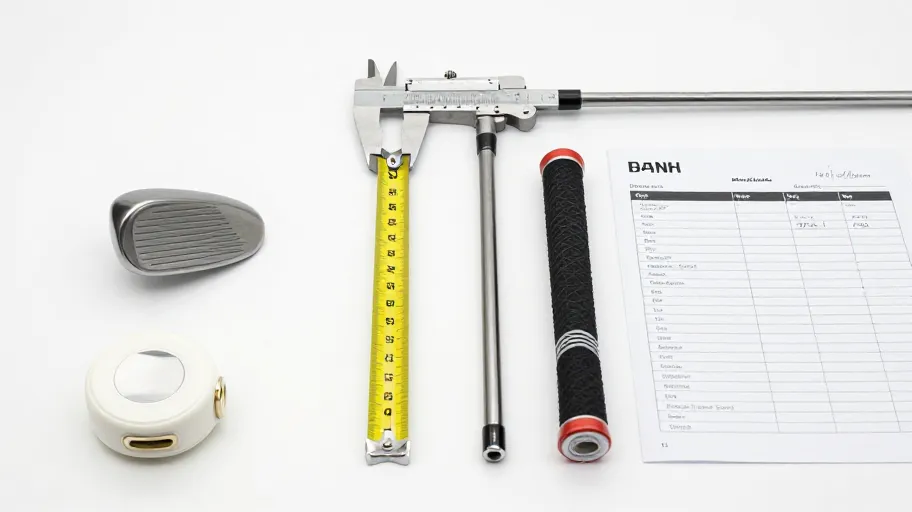
You don’t need a lab to get pro-level results—just 20 minutes and a method. Start by measuring each club using a balance rail or calibrated scale app. Benchmark against Tour standards (D0–D5 for irons) to spot gaps. The key to adjusting swing weight for better feel lies in tiny changes: adding 2g to the grip end lowers swing weight by ~2 points, lightening the dynamic feel without re-gripping.
Use tungsten tape or adjustable end caps for non-destructive tweaks. After each adjustment, hit five balls and assess feedback. A Midwest clubfitter’s client improved strike consistency by 14% after three rounds of testing, proving iterative tuning builds neural reinforcement.
Stick within ±3 points of your baseline—over-adjustment risks instability. When you dial in swing weight accurately, you’re reinforcing muscle memory with every swing. That consistency compounds into long-term improvement, turning practice into predictable performance.
Master Your Swing, DIY Your Fit. DIY Golf is the premier destination for the technical golfer. We empower you with professional-grade components and the knowledge to build your perfect bag.