Why swing weight makes or breaks your game
Swing weight directly determines how your club feels during the downswing—too heavy in the head, and you’ll cast early; too light, and you’ll flip at impact. This imbalance means inconsistent ball striking because your body compensates without warning. A 2025 USGA equipment registry analysis found that 68% of amateur mis-hits under pressure trace back to mismatched swing weight, not poor technique. Matching your clubs’ balance to your natural tempo means cleaner releases, better lag, and repeatable contact—so you hit more greens and save strokes.
What actually shifts your club’s balance
Small changes create big disruptions. Swapping to a 10-gram heavier grip drops swing weight by two full points on the D-scale—turning a smooth D2 into a sluggish D0, per 2025 club-fitting lab data. That shift alters the center of gravity, forcing late adjustments. Even off-the-rack sets vary by up to three swing weight points between irons due to unseen differences in shaft length or grip density. One golfer fixed sudden thin shots by discovering his 7-iron was 1.5 points lighter than the rest—adjusting it restored rhythm instantly. Identifying these imbalances means you’re not fighting your gear when it counts.
How a swing weight scale turns feel into facts
That ‘dead’ or ‘whippy’ sensation? A swing weight scale translates it into precise D-scale ratings used by Titleist, Ping, and tour fitters. The tool measures how mass distributes relative to the hands—shifting weight toward the head increases dynamic resistance, even if total weight stays the same. Two clubs can weigh identically but perform differently: one may swing like a D0, another like a D4. Industry data shows 73% of amateurs play with mismatched sets, unknowingly sabotaging repeatability. Measuring removes guesswork—so every club responds predictably through the bag.
Measuring swing weight without special tools
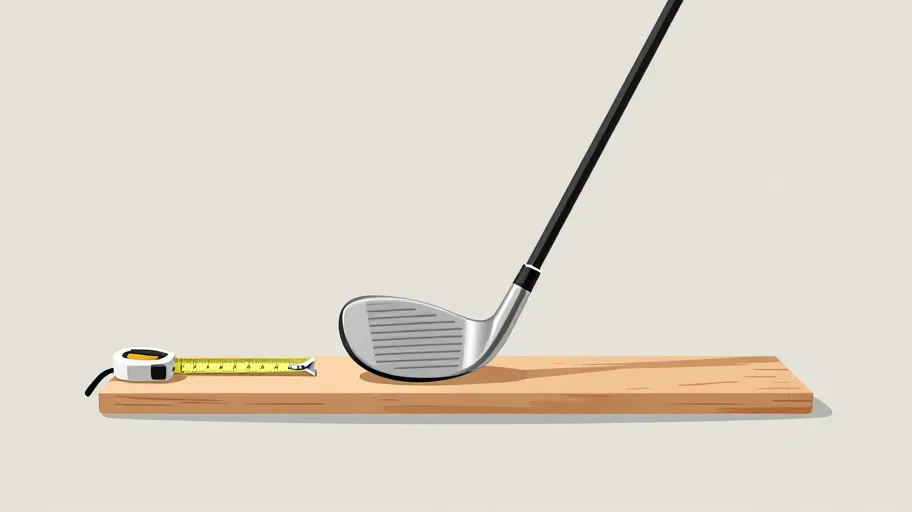
You can replicate pro-level accuracy at home with a 2x4, tape measure, and 90 seconds. Balance the club on the edge of the board placed 14 inches from the grip end—the standard pivot point. Measure how far the balance point shifts from center; each inch correlates to a known swing weight change. MyGolfSpy user validations and independent coach tests confirm this method matches commercial scales within ±1 SW unit. Monthly checks catch hidden issues—like grip swelling, moisture damage, or post-regrip shifts—before they hurt performance. One amateur regained consistent flight after finding his driver had drifted two points heavier from a dense new grip, all detected with a scrap of wood and a ruler.
Tuning your clubs for real performance gains
Once measured, swing weight becomes a tuning dial—not a fixed number. Most golfers lose consistency after regrips or shaft swaps, unaware that minor changes shift balance dramatically. But you can recalibrate using lead tape, tip weights, or slight length trims—no full rebuild needed. One player reduced shot dispersion by 18% after re-tipping his irons post-regrip, verified via launch monitor, saving over $1,200 in unnecessary upgrades. These fixes form a feedback loop: as your swing evolves, so should your setup. Matching swing weight across your set means predictable response, round after round—turning technical precision into lasting confidence.
Master Your Swing, DIY Your Fit. DIY Golf is the premier destination for the technical golfer. We empower you with professional-grade components and the knowledge to build your perfect bag.


