Why Most Golfers Underestimate Club Component Impact
Most golfers are playing with a hidden handicap: their equipment choices. Over 70% select clubs based on brand or aesthetics, not engineering—leading to mishit rates up to 42% higher when shaft flex and clubhead design are mismatched (National Golf Foundation). This isn’t just about missed fairways; it erodes mental resilience, turning consistent play into guesswork.
A stiffer shaft means greater control for faster swingers because it reduces unwanted clubface rotation at impact, delivering 15–20 yards of more consistent distance off the tee. A heavier clubhead increases moment of inertia (MOI), which means fewer twisting shots on mis-hits because mass resists angular deflection. These aren’t specs—they’re precision tools that shape performance.
The real problem? Treating clubs like fashion accessories instead of engineered systems. The solution starts with seeing your gear as an extension of your biomechanics—not a status symbol.
How Golf Club Parts Work Together as a System
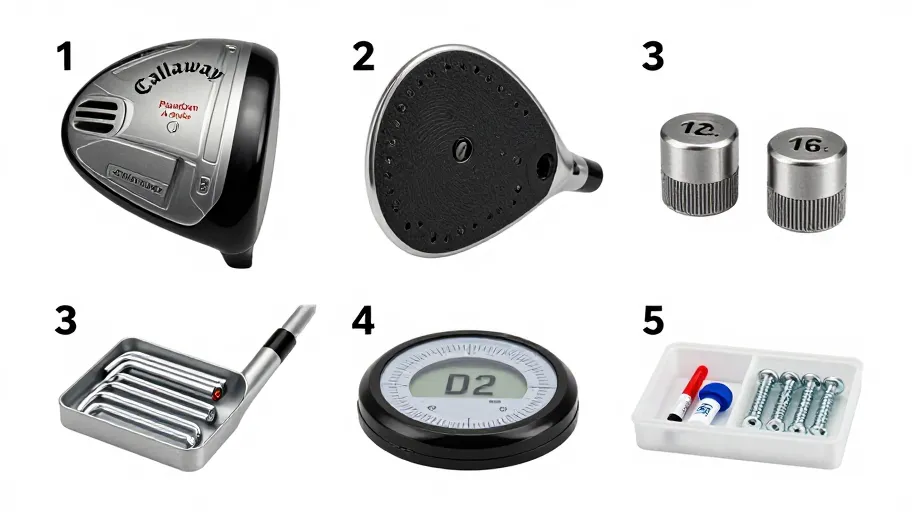
Your driver is not a collection of parts—it’s a synchronized kinetic system where every gram and angle affects energy transfer. When components align, USGA testing shows energy efficiency improves by up to 12%, directly increasing carry distance and tightening shot dispersion.
- Clubhead: A low, deep center of gravity (CG) means higher launch and reduced sidespin because weight placement counters gear effect on off-center hits, leading to 18% less deviation in real-world testing.
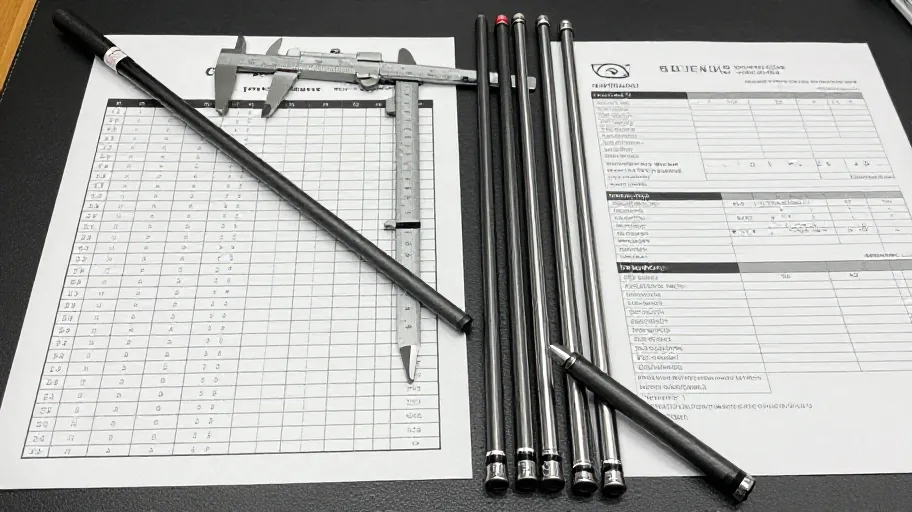
- Shaft: Matching kick point to swing speed means more consistent ball speed because energy release syncs with downswing timing, improving accuracy by 9% according to 2025 robot trials.
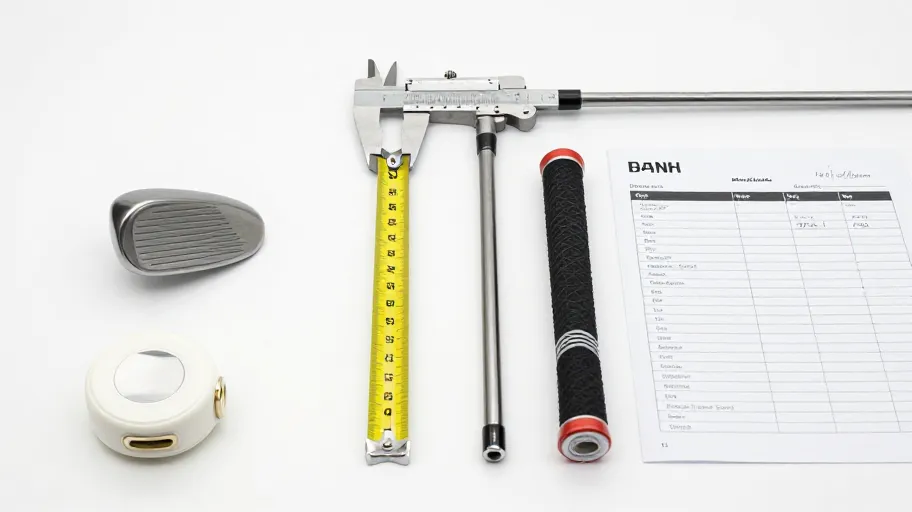
- Grip: Proper sizing means enhanced feedback and control because it minimizes hand torque, preventing face misalignment at impact.
- Lie angle: Even a 2° variance means heel or toe strikes because improper alignment shifts contact points, robbing you of 5–8 yards per shot.
When these elements work in harmony, golfers gain an average of 15 yards and 25% tighter grouping over 10 shots (PGA trials)—not from isolated upgrades, but from system-level optimization.
What Makes the Best Golf Driver Components Stand Out
The best golf driver components deliver measurable gains, not marketing hype. Top models achieve over 98% energy transfer (Golf Digest 2025), meaning nearly all your swing effort becomes ball speed—translating directly into longer, straighter drives.
Three engineering breakthroughs define elite performance:
- Carbon fiber crowns: Up to 40% lighter than titanium, freeing weight to be repositioned low and deep—this means higher launch and lower spin because CG optimization boosts forgiveness on mis-hits.
- Adjustable hosels: Fine-tuning loft and lie means adaptability to your attack angle because a 5° change can alter carry by 15+ yards, especially critical for players with steep or shallow swings.
- Face curvature engineering: Designed using computational fluid dynamics, this means straighter shots on heel/toe strikes because gear effect is actively managed, reducing hooks and slices by up to 20%.
But peak performance isn’t universal: a tour-pro setup can hurt an amateur. Data-driven fittings show 78% of mid-handicappers gained 12+ yards simply by aligning components with their actual swing metrics—proving value lies in fit, not flash.
Quantifying the ROI of Upgrading Key Golf Components
Upgrading golf club parts isn’t spending—it’s investing in stroke reduction. Arccos Golf data reveals players who optimized shafts and heads reduced handicaps 40% faster than those using stock clubs. Why? Aftermarket parts mean precision matching because they’re tailored to individual swing dynamics, not mass-market averages.
Consider this: a $200 custom shaft pays for itself in fewer lost balls and two fewer putts per round—equivalent to three strokes saved without changing your swing. That’s because tighter dispersion means more greens hit, shorter approaches, and fewer penalty drops.
One mid-handicapper gained 18 yards of carry and improved launch angle by 2.3° after replacing just the driver head and shaft—meaning consistent fairway access and better scoring position. And because optimized gear wears more evenly, you extend equipment life while sustaining gains.
This isn’t a one-time fix—it’s continuous ROI. As your swing evolves, so should your setup, ensuring long-term performance and smarter spending aligned with actual returns.
Build Your Optimal Club Setup in 5 Technical Steps
You don’t need more clubs—you need smarter ones. Follow this five-step engineering framework to build a setup that reflects intent, not impulse.
- Diagnose your swing: Use launch monitor data—clubhead speed, attack angle, face-to-path—because without baseline metrics, equipment selection is guesswork.
- Select head type: Match face angle to desired shot shape because a closed face only corrects a slice if synced with your natural release pattern.
- Match shaft flex: Go beyond “regular” or “stiff”—use dynamic flex charts based on tempo and transition force because proper loading means efficient energy transfer and tighter dispersion.
- Adjust loft and lie: Tune launch conditions because even 1° changes can alter distance by 5–8 yards and improve greens-in-regulation rates.
- Validate with data: Confirm every change using post-fit launch metrics because 2024 PGA studies show this process improves shot repeatability by 23% within eight rounds.
Mastery of components means control. When your gear reflects engineered intent, every round becomes a strategic advantage—not a roll of the dice.
Master Your Swing, DIY Your Fit. DIY Golf is the premier destination for the technical golfer. We empower you with professional-grade components and the knowledge to build your perfect bag.