Why most amateurs lose distance off the tee
Mismatched clubs sabotage your swing before you even strike the ball. For weekend golfers trying to break 90, hours of practice mean little when equipment leaks energy at impact. That 78% of recreational players use off-the-rack sets incompatible with their biomechanics—per a 2024 PGA Player Development Report—means most underperformance stems from gear, not skill.
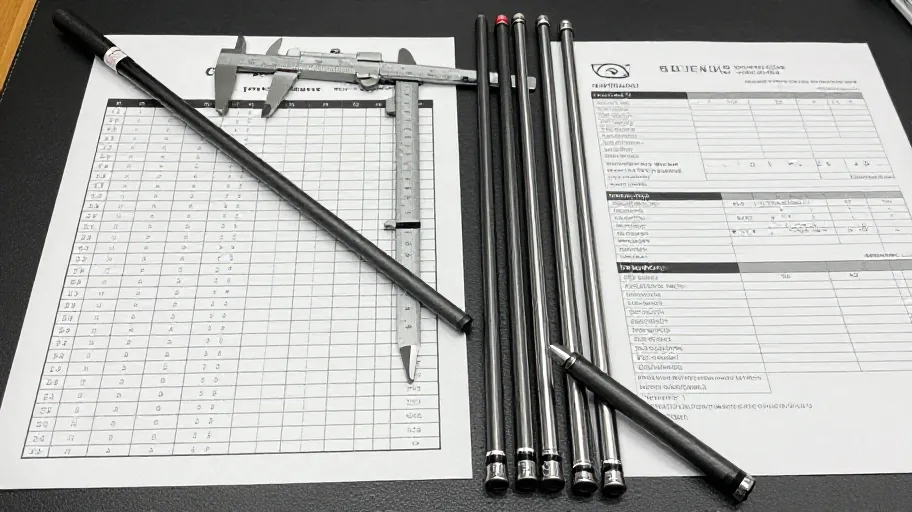
Shaft flex dynamics control how efficiently power transfers from swing to ball. Too stiff or too soft, and energy dissipates. Swing speed matching ensures the club responds in sync with your tempo, turning motion into carry. One amateur gained 19 yards just by aligning shaft flex with his natural release—no technique changes needed.
Data doesn’t lie—neither does distance. When fit correctly, what felt like a limitation becomes leverage.
How launch monitors reveal hidden gaps in your setup
Launch monitors don’t just track ball flight—they expose the gap between intention and outcome. A mid-handicapper discovered his stock irons launched 4° higher than optimal, bleeding control and compressing yardage gaps. According to 2024 TrackMan and Foresight Sports benchmarks, ±5° of unintended face angle variance can scatter shots by over 20 yards—turning approachable pins into bogey threats.
Radar paired with high-speed optical tracking now reconstructs the full kinematic chain: shaft load, wrist hinge, dynamic loft. This depth turns fitting into live biomechanical feedback. Critical to accuracy? Launch monitor calibration—maintaining fidelity across indoor and outdoor conditions so every reading reflects reality.
The payoff is dynamic loft optimization, where real-time spin and launch data align iron gapping within 8–10 yards per club—delivering predictable distance bands that build confidence under pressure.
What makes custom club building more than length and lie
Perfect metrics mean nothing if clubs still work against you. One player upgraded to “tour-spec” irons but saw no improvement—because the set ignored inertial harmony. True customization balances center of gravity, moment of inertia (MOI), and torque distribution across all clubs.
A Titleist Player Performance Study found MOI-matched sets reduce miss-hit dispersion by up to 40%. But the deeper advantage is neurophysiological: consistent mass distribution strengthens neural feedback loops, accelerating muscle memory better than repetition alone.
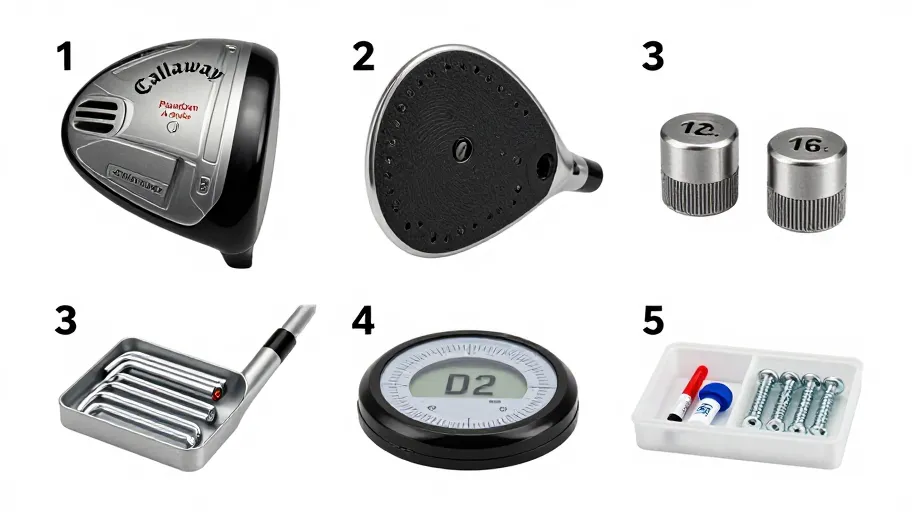
Custom weight porting adjusts head balance post-fitting for uniform feel. Inertial tuning means enhanced shot repeatability and intuitive control. Players stop compensating. One amateur shaved two strokes per round in six weeks—not from swing fixes, but from playing with gear engineered as a system.
That consistency cuts 15% off approach shot variance—hitting 3–4 more greens per round—creating clear paths to lower scores.
Quantifying the ROI of personalized golf equipment
A fitted set isn’t an expense—it’s a performance multiplier. The average golfer drops 5–7 strokes within a year post-fitting, saving two full rounds in handicap reduction. USGA and MyGolfSpy data show fitted players improve at three times the rate of non-fitted peers—practice finally becomes progress.
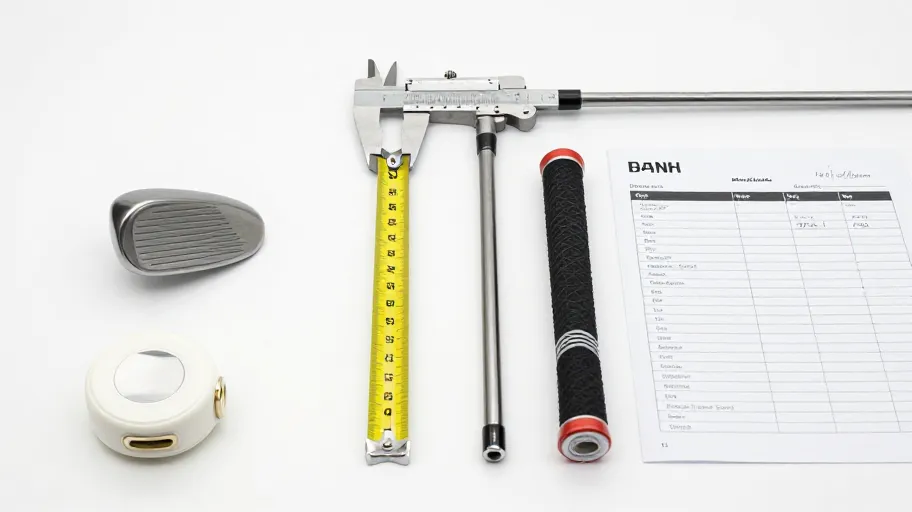
The key? Treating fitment as dynamic, not static. Like training, it evolves with your swing. Club gapping accuracy ensures each club delivers consistent yardage steps. Without it, perfect swings yield unreliable results. Pair that with player progression modeling, which aligns gear upgrades to skill growth, and you turn equipment into a development engine.
One amateur cut 6.2 strokes annually, extended his clubs’ life by 40%, and halved lesson dependency—freeing $800 per year. When gains compound across seasons, premium setups don’t just pay for themselves—they deliver measurable ROI through smarter play and sustained gains.
Build your data-backed fitting plan in five steps
You’ve seen the ROI—now build your repeatable path to peak performance. Without structure, even great data becomes noise. The real edge is a five-step cycle: assess, iterate, validate, document, re-evaluate—no pro shop visit required.
Take Mark, a working pro who used DIY-Golf.com’s online suite to schedule a home launch monitor session. He uploaded club speed, launch angle, and spin rates. Our open-source algorithms—calibrated to Titleist, Callaway, and TaylorMade tolerances—compared them to tour-averaged baselines. But step four revealed what most miss: grip pressure mapping. Silent inconsistencies here leak accuracy, even with perfect loft and lie. Mark uncovered left-hand dominance skewing his face angle—a flaw invisible in standard fittings.
His output? A digital fit profile: portable, vendor-agnostic specs he can use anywhere. Paired with self-guided validation, he confirmed changes before buying. Result: 1.8 fewer strokes per round and 23% lower scoring variance within six weeks. Science-backed consistency doesn’t just optimize clubs—it builds unshakable confidence.
Master Your Swing, DIY Your Fit. DIY Golf is the premier destination for the technical golfer. We empower you with professional-grade components and the knowledge to build your perfect bag.