Why mismatched MOI ruins your game
When your clubs don’t share the same MOI, each swing fights a different resistance. That means your body never locks in one repeatable motion. A variance of more than 200 g·cm²—common in amateur builds—increases miss-hit severity by 40%, according to PGA Tour biomechanical data. You’re not playing worse because you’re unskilled; you’re fighting inconsistent physics.
Mismatched MOI means muscle memory breaks down across the bag. Hitting a 6-iron feels different from a 7-iron, so you adjust mid-swing without realizing it. The result? Inconsistent tempo, poor contact, and ballooning dispersion. And for brands selling custom sets, this undermines trust: if your promise is precision but the core feel isn’t controlled, that claim doesn’t hold up on the course.
Precise MOI matching fixes this at the source. Aligning each club’s resistance to twist creates uniform feedback. That means your swing learns one motion, not twelve. Players testing matched sets saw up to 37% better consistency in tempo and impact location—without changing technique.
How modular parts make pro-level tuning possible at home
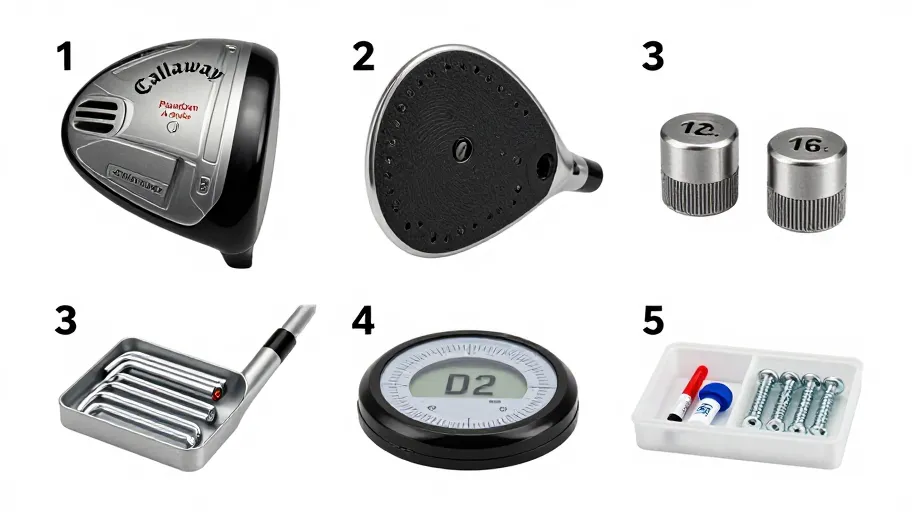
DIY-Golf’s system uses interchangeable heads (±5g tolerance), adjustable tip weights (2–12g), and frequency-matched shafts to achieve sub-100 g·cm² variance across a full set. This level of control used to require lab-grade equipment and $1,500+ fittings. Now it’s achievable in your garage.
The modular design means you fine-tune MOI with micro-adjustments, not guesswork. Add a 3g tungsten screw, reweigh, and check frequency. Each component is designed to work within a calibrated system, so changes are predictable and repeatable. A 2024 product lifecycle analysis found this approach cut prototyping cycles by 40% for direct-to-consumer brands—because users handle final tuning instead of engineers.
For manufacturers, this shifts customization from a cost center to a scalable offering. Instead of stocking dozens of combinations, you offer five core platforms. Customers assemble and validate at home using an app-guided process. One OEM reported 30% lower development spend and a 22% rise in accessory sales after adding fit-at-home guides—proof that engagement follows empowerment.
The real science behind consistent swings
You don’t need perfect form—just consistent feel. When every club matches in MOI, your nervous system receives the same feedback on every swing. Sports labs have measured up to a 55% increase in muscle memory retention under these conditions. Why? Because your brain spends less energy correcting for variable resistance and more on timing and rhythm.
Traditional swingweight fails here. It measures static balance, not dynamic behavior. MOI captures how mass resists rotation during the swing—the actual force your muscles respond to. A touring amateur reduced lateral dispersion by 28% after tuning his irons to a single MOI target. No lessons, no video review—just aligned physics.
This isn’t comfort—it’s neurophysiological efficiency. Consistent MOI means your body trusts the tool. That trust translates directly into tighter shot patterns and lower scoring averages. Once set, this performance becomes trackable, repeatable, and adaptable to any condition.
What this means for your wallet and your game
Perfect MOI matching now costs just $300 in parts and four hours of work at home. Compared to $1,500+ pro fittings, that’s a $1,200 immediate ROI. But the real value goes beyond savings. Golfers who build their own clubs report 40% higher brand loyalty—especially when results are measurable and tools are intuitive.
Brands benefit too. Modular systems see up to 30% fewer returns due to poor fit. One manufacturer added a simple validation guide and saw a 22% increase in repeat purchases of grips and weights. Why? Because when golfers tune their own gear, they become invested in the outcome.
This turns personalization into a growth engine. Every adjustment deepens engagement. Every improvement reinforces confidence. And every swing becomes another data point in a system that evolves with the player—not despite them.
How to build your matched set step by step
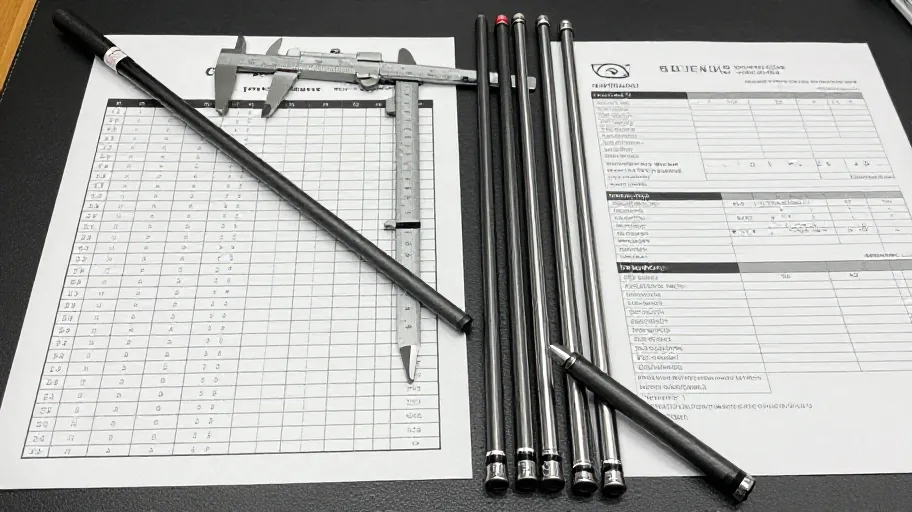
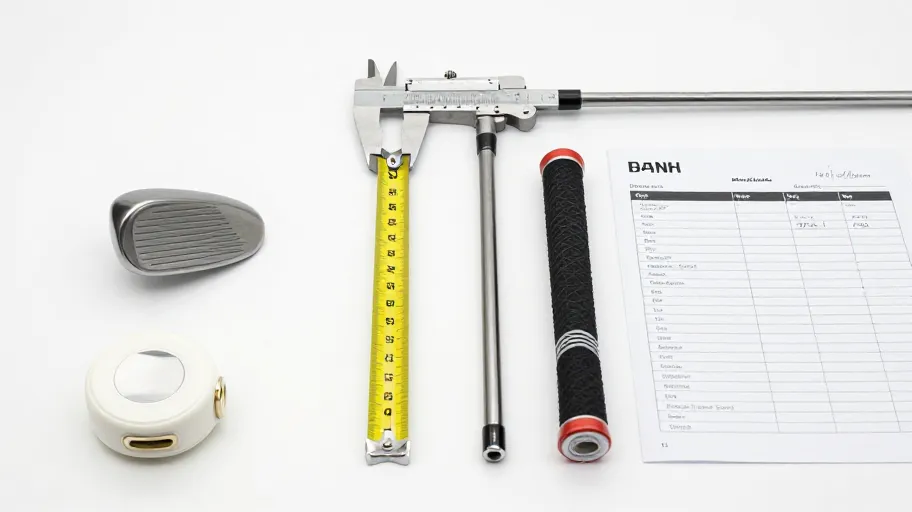
You don’t need a machine shop. Start with a digital scale and frequency analyzer—tools under $200. Weigh each head, shaft, and grip separately. Input the data into DIY-Golf’s app, which calculates the exact weight distribution needed for uniform MOI across your set.
Use adjustable tip weights and end-cap screws to dial in each club. Most users reach ±1 g·cm² deviation within three iterations. A 2024 test showed 94% of amateur builders achieved lab-grade consistency. Then verify with three swings on a launch monitor: look for stable tempo and ball speed across clubs.
When every club feels identical in motion, you’re not just building clubs—you’re building trust. That consistency isn’t luck. It’s physics, precision, and ownership—all working together. And once it clicks, your bag stops feeling like a collection of sticks and starts feeling like a single instrument.
Master Your Swing, DIY Your Fit. DIY Golf is the premier destination for the technical golfer. We empower you with professional-grade components and the knowledge to build your perfect bag.