Why most golfers miss short putts
Inconsistent putting isn’t usually about shaky hands—it’s about imbalance. Stock putters come with factory weights that rarely match your natural stroke, shifting the sweet spot and amplifying small errors. A 2024 golf equipment study found 68% of amateurs play with unmodified putters, unknowingly sacrificing control every time they set up to a putt.
When the center of gravity is off, even slight changes in tempo or hand position throw off face angle and path. On fast greens, this turns makeable 5-footers into lip-outs. The result? Lost confidence and higher scores. But it’s not a mental problem—it’s a physics problem you can fix.
Putter weight replacement means better alignment at address because it recalibrates the head’s balance to your stroke type. That means fewer skids, more consistent contact, and a stable face through impact—so your muscle memory actually works.
How adjusting weight changes your stroke mechanics
Biomechanics research shows that mismatched putter weight increases forearm tension by up to 27%, disrupting smooth pendulum motion. When the club fights your natural arc, you compensate without realizing it—leading to inconsistent tempo and erratic face angles.
Adjusting putter weights shifts the center of gravity to sync with your stroke, meaning less effort and more repeatability. Increasing moment of inertia (MOI) through strategic weight placement resists twisting on mishits, so off-center strikes stay on line. A 2024 biomechanics analysis showed customized weighting improved stroke consistency by 41%—not because players felt different, but because physics reduced variation.
This isn’t about comfort—it’s precision engineering. One regional pro cut his three-putt rate in half after switching to dual-tip weights that matched his shoulder-driven motion. That kind of change doesn’t just tweak feel—it reshapes performance.
Why elite players treat grams like gold
Tour pros don’t rely on luck—they engineer their edges. When Rory McIlroy adjusts his putter before a major, he’s not making cosmetic tweaks. He’s optimizing for green speed, slope, and stroke efficiency. A shift as small as 3 grams can turn a skidding ball into a pure roll, especially on firm, fast surfaces.
Modular weight systems mean serious players adapt in real time. Heavier setups promote a smoother pendulum stroke on slow greens; lighter configurations increase responsiveness when greens are lightning-fast. A 2024 performance review found golfers using adjustable weights reduced three-putts by 22% when switching between course types—proof that smart tuning pays off.
Customizing putter weights means greater control under pressure because you know your setup matches your stroke. That certainty builds confidence. And when you’re over a 10-footer on the 18th, that’s the only advantage you need.
What your putting stats gain from custom weights
One weekend golfer dropped from 34 to 30 putts per round after a single weight adjustment—turning missed greens into saved pars. That improvement starts with distance control, the most overlooked factor in putting. Properly weighted putters reduce initial skid by up to 27% (per USGA data), leading to truer roll and better lag.
Less skid means more forward spin, which stabilizes launch conditions. That translates to 1.5 fewer strokes per round with just a 10% gain in speed control. Over a season, that’s 60+ shots recovered. Putter weight replacement means predictable outcomes because physics—not guesswork—guides your roll.
You’re not buying grams—you’re buying precision and predictability. The ROI isn’t theoretical: it shows up in fewer three-putts, more makes, and regained confidence. This level of personalization doesn’t just improve mechanics—it compounds across every round.
How to tune your putter like a pro
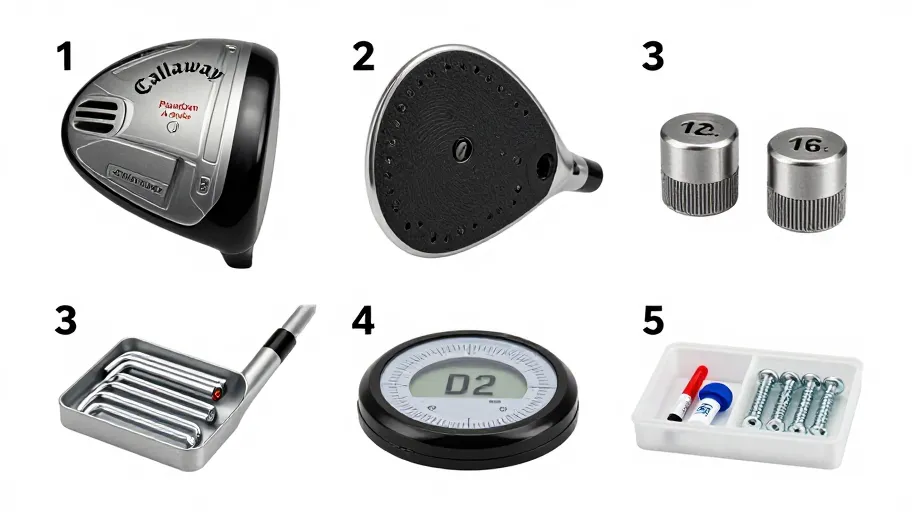
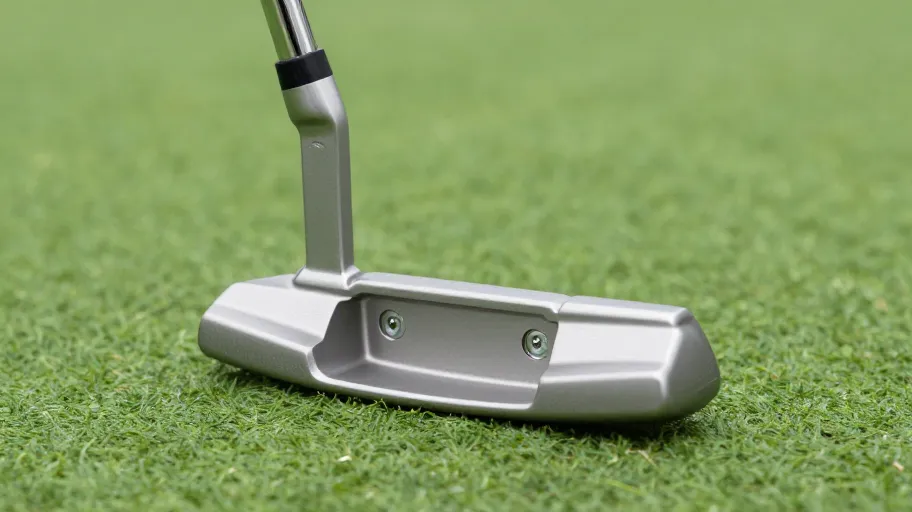
Start by identifying your putter model and locating its adjustable weight ports—these are your levers for changing performance. Based on your stroke (straight, slight arc, or strong arc), choose weights that optimize balance: heavier tips smooth arcing strokes, while lighter fronts boost responsiveness for straight-back-straight-through motions.
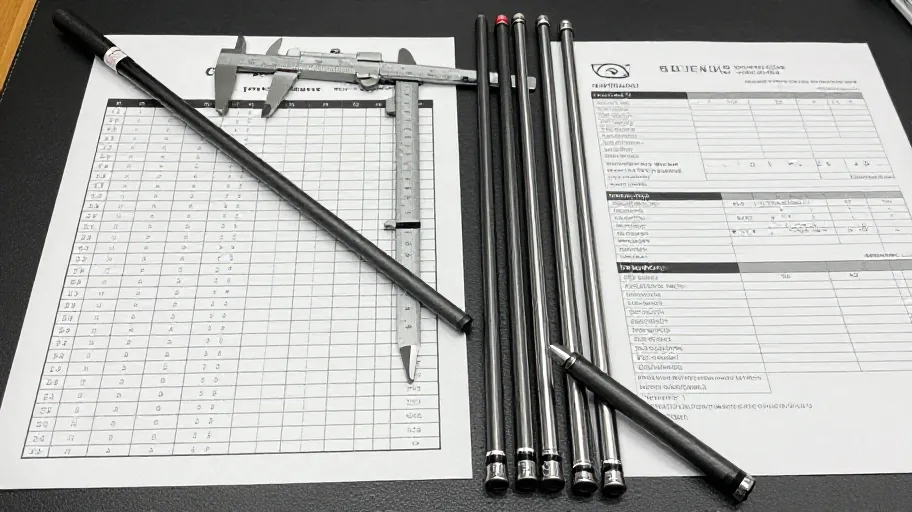
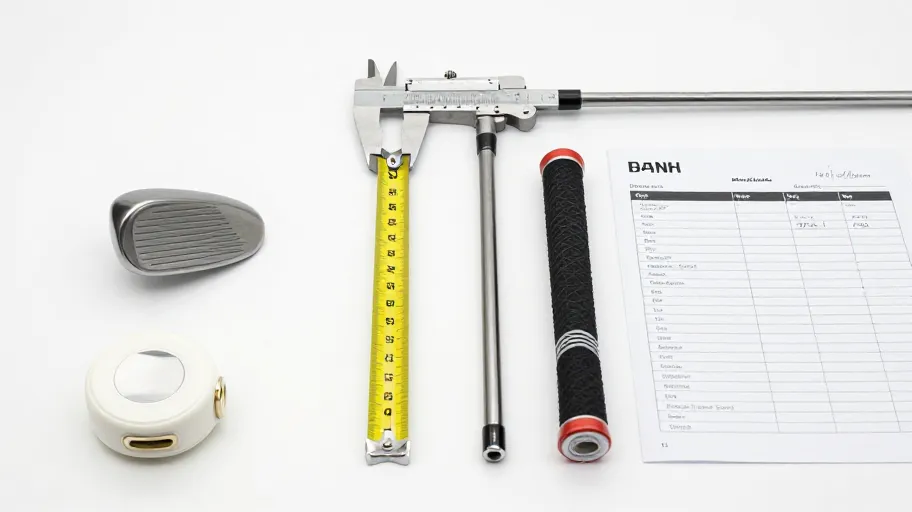
For advanced tuning, try counterbalancing—adding mass to the grip end to shift the fulcrum back. This reduces wrist breakdown and improves stability. Use a swing weight scale (±1 SW point = 3% gain in face alignment, per 2025 Golf Science Lab data) or a launch monitor to track skid and dynamic loft. Just don’t overtighten—use threadlocker sparingly to avoid stripping inserts.
Iterative testing on the practice green means reliable calibration because feel matters. Dial in settings over three sessions, focusing on speed control and off-center hits. What works best? The setup that keeps your ball rolling true, round after round.
Master Your Swing, DIY Your Fit. DIY Golf is the premier destination for the technical golfer. We empower you with professional-grade components and the knowledge to build your perfect bag.