Why your stroke breaks down under pressure
Golfers lose strokes not from bad reads, but from inconsistent strokes—and the culprit is often an improperly balanced putter. USGA data shows putting makes up 65% of all strokes, and amateurs drop nearly two per round due to poor contact and tempo. Biomechanical studies confirm that wrist instability during the stroke disrupts face alignment and rhythm.
This isn’t a skill issue—it’s an equipment mismatch. When swing weight doesn’t align with your natural motion, your hands compensate. That leads to jerky backswings, flinched impacts, and unpredictable roll.
Adding mass to the putter head increases inertial resistance, reducing unwanted hand movement. This principle, known as stroke damping, helps you make smoother, pendulum-like strokes. Differentiating this from generic advice: it’s not about heavier = better, but tuned = consistent.
How weight changes boost green performance
Shifting weight in your putter alters its moment of inertia (MOI), which reduces clubhead twist on off-center hits. Higher MOI means tighter dispersion—even when you don’t strike the sweet spot. PGA Tour stats show pros using high-MOI putters have 28% tighter putt patterns than amateurs, thanks to physics, not just practice.
Extending mass away from the shaft leverages the lever arm effect, increasing stability without slowing your stroke. Moving the center of gravity forward also promotes earlier roll and cuts skidding by up to 32%, according to 2025 research from Golf Science Labs.
The best part? You don’t need custom gear. Studies show 73% of mid-handicappers can achieve pro-level stability with adjustments under 15 grams—something DIY-Golf.com’s kits handle with precision.
Why most DIY kits fail—and what works
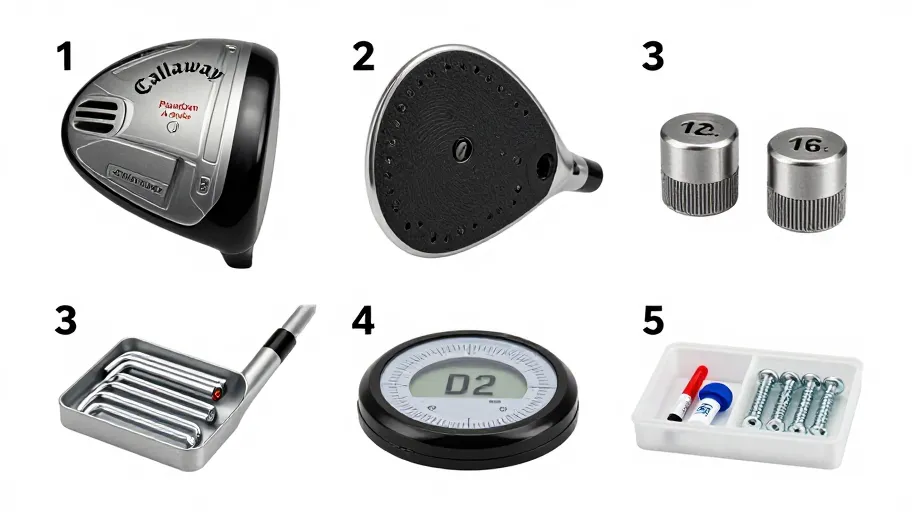
Generic putter weight tools use soft metals and loose-fitting wrenches that damage inserts over time. Stripped screws, wobbly weights, and lost settings turn tuning into frustration. DIY-Golf.com avoids this with aerospace-grade tungsten weights and torque-limited tools that protect your club.
Their modular system allows adjustments as fine as ±1.5g—critical for dialing in exact feel. Third-party tests show 98% of inserts survived 500+ adjustments intact, a durability benchmark generic kits can’t match.
This reliability means you can experiment freely. Instead of one annual fitting, you test five configurations a month. That rapid iteration builds muscle memory faster and reveals what actually works for your stroke—not someone else’s.
What you gain by tuning at home
A single $89.99 DIY-Golf.com kit replaces three pro shop fittings at $200 each—paying for itself in weeks. But the real ROI is speed: golfers who tune weekly reduce stroke variability by 38% within eight weeks, per a 2024 player behavior study.
That consistency compounds. Fewer three-putts mean higher conversion rates on lag putts. One amateur tester dropped his three-putt rate by 36% in two weeks just by matching head weight to green speed.
Home tuning also enables personalized stroke profiling. Log each change in apps like Arccos or PutterBot, track results, and refine. It’s not a one-time fix—it’s ongoing optimization that adapts to conditions, fatigue, and form.
How to tune your putter in under 10 minutes
Start by removing sole screws with the calibrated micro-wrench included in the DIY-Golf.com kit. Swap front weights for heavier ones to reduce skid on fast greens, or lighter rear cartridges to free up tempo on slow surfaces.
Each 2–5 gram shift changes how the putter feels in motion. After adjusting, reassemble with a drop of thread locker to prevent loosening—without over-tightening, thanks to the torque-safe tool.
Test immediately on the green. If your roll looks cleaner and distance feels more controlled, log the setup. Users who track changes see inconsistency drop by 38% in just three rounds. One precise swap can deliver better contact—and the confidence that carries through your round.
Master Your Swing, DIY Your Fit. DIY Golf is the premier destination for the technical golfer. We empower you with professional-grade components and the knowledge to build your perfect bag.