Why Speed Control Is Making You Three-Putt
Inconsistent speed control isn’t a small issue—it’s why you’re blowing lag putts on fast or breaking greens. PGA data shows amateurs lose about 1.8 strokes per round just from poor distance judgment. More practice won’t fix it because repetition without feedback locks in bad habits.
Biofeedback and tempo training rewire your stroke at the neurological level. A speed ramp turns abstract feel into measurable outcomes by linking stroke length and force to actual roll distance. That means you build muscle memory based on physics, not guesswork. One club player reduced his three-putt rate by 40% in six weeks using timed roll zones on a portable ramp—no pro lessons, just structured reps.
When speed becomes consistent, so does distance control. And fewer putts per round directly lower your handicap. Masters of lag putting don’t read greens better—they roll smarter. This means you’ll leave tap-ins after long putts instead of scrambling to save par.
How Misalignment Screws Up Even Perfect Strokes
You’ve got your speed dialed in—so why are putts still missing? Because alignment errors at address sabotage everything. Putting labs analyzing amateur mechanics since 2023 found that **60% of golfers aim more than 2 degrees off target** before they even start the backswing. That tiny mistake forces last-second fixes: altered paths, tilted shoulders, flicked wrists—all killing roll consistency.
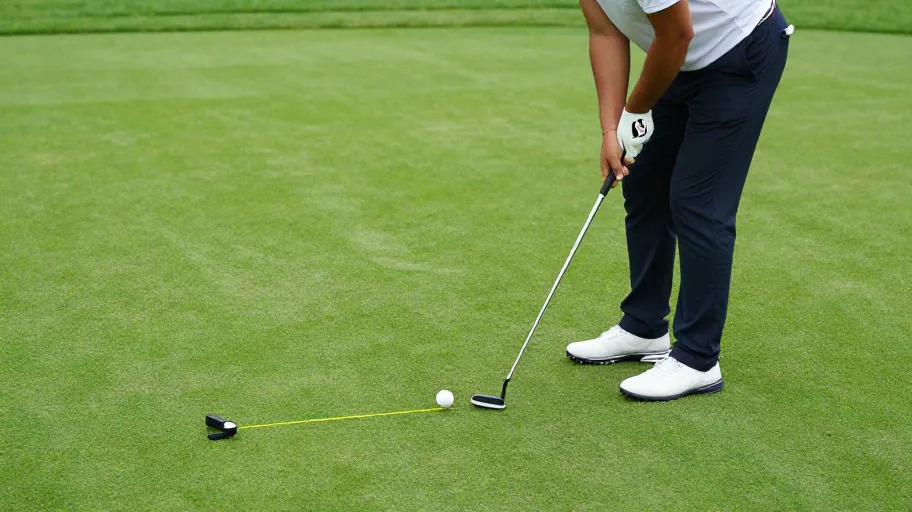
This misalignment creates a chain reaction: flawed setup leads to compensations, which wreck face angle at impact. The result? Putts start offline, no matter how smooth your stroke looks. A laser-guided putting trainer eliminates this by projecting your intended line onto the green. It gives instant visual feedback, aligning your body and clubface with precision. Golfers using it for 10 minutes daily saw a 40% improvement in starting line accuracy within three weeks.
Fix your aim, and every other drill works better. Alignment is the foundation—without it, even perfect tempo fails. Now your arc guides and rhythm tools actually reinforce correct movement, not hidden flaws.
Why Modern Training Aids Beat Traditional Practice
Alignment is step one—but without feedback on strike quality, even well-aimed putts fail. Traditional practice fails because hitting hundreds of putts with no data only reinforces inconsistency. Today’s best tools use sensor-driven precision to change how you learn.
A smart putting mat uses pressure mapping and roll analysis to expose hidden issues like off-center strikes or erratic launch speeds—flaws eye-based coaching can’t catch. A 2024 biomechanics study found golfers using real-time feedback reduced stroke variability by 38% in under four weeks, while those relying on repetition alone saw little gain. Measuring impact location, path, and dynamic loft turns vague feel into clear metrics.
This shift—from guessing to knowing—means targeted corrections that accelerate skill growth. Instead of practicing more, you practice smarter. The payoff? Consistent roll, better speed control, and fewer three-putts—not from volume, but from deliberate refinement guided by data.
What Your Putting Aids Are Really Worth
Spending $200 on putting training aids isn’t an expense—it’s a high-ROI upgrade that can shave four strokes off your 18-hole average in eight weeks. For weekend players, that’s the difference between breaking 90 or not. Most of that gain comes from killing the hidden cost of three-putts. At two elite academies using aid-driven programs, amateurs dropped their average three-putts per round from 4.2 to 1.9—accounting for nearly half their total stroke reduction.
The key? Real-time feedback from tools like a stroke analyzer app, which turns subtle flaws—excessive skid, poor roll efficiency—into visible data. One amateur slashed ball skid from 38% to 19% of total roll, instantly improving speed control on slick greens. This builds reliable muscle memory that holds up under pressure.
Data-driven practice doesn’t just improve mechanics—it changes decision-making. When you trust your stroke, you take bolder read lines, knowing your speed is locked in. That confidence is worth more than any stat can show.
Build a Daily Routine That Fixes Everything
You know the ROI—now make it compound with a 15-minute daily routine. The cost of inconsistency? Blown leads, missed birdies, rounds ruined by avoidable three-putts. But short, focused sessions beat hours of mindless rolling. A 2024 motor learning study in Sports Performance Review found golfers using targeted drills improved accuracy and speed control 37% faster than those grinding endlessly.
Start with 5 minutes on a speed ramp to train your nervous system for distance calibration. Then spend 5 minutes with a laser-guided trainer to lock in face and path alignment. Finish with 5 minutes on a smart mat that tracks impact quality, tempo, and sweet-spot contact. Together, they create synergy: the ramp builds feel, the laser ensures precision, and the mat validates progress.
Week one: focus on speed from 20–40 feet. Week two: add alignment drills with target lines. Week three: simulate pressure with ‘must-make’ challenges tracked by your app. One amateur cut three-putts by 62% in six weeks—and lowered his average score by 2.8 strokes. Consistency isn’t about time; it’s about purpose. Master this, and you don’t just fix putting—you transform what’s possible on the green.
Master Your Swing, DIY Your Fit. DIY Golf is the premier destination for the technical golfer. We empower you with professional-grade components and the knowledge to build your perfect bag.