Why most golfers miss the mark on long putts
Inconsistent distance control costs amateurs 8–10 strokes per round—mostly from three-putts on lag attempts over 30 feet. PGA Tour data shows weekend players miss optimal speed by 20–30% on downhill putts, turning makeable second putts into penalties. This isn’t just bad feel—it’s physics.
USGA biomechanical studies confirm that an unbalanced center of gravity (CG) disrupts stroke tempo. When the CG sits too high or forward, the ball skids instead of rolling, destabilizing face angle at impact. Golfers respond by tightening their grip or shortening the stroke, worsening the problem. The root cause? A mismatch between your natural stroke arc and your putter’s dynamic balance—not flawed technique.
Adjustable putter weights fix this at the source. By tuning CG alignment, you enable smoother acceleration and cleaner launch, so the ball starts rolling end-over-end from impact. That means better speed control, especially on fast or breaking putts where early skid kills accuracy.
How weight affects roll quality and stroke stability
Putter weight isn’t about heaviness—it’s about matching inertia to your stroke. Too light, and you’ll over-accelerate; too heavy, and you’ll decelerate before impact. Both kill consistency. But when the mass aligns with your tempo, the putter feels like an extension of your hands.
A golf R&D lab tested 300g vs. 360g heads using SAM PuttLab. The optimized weight reduced skid-to-roll distance by up to 40%, achieving pure roll in under 20 inches—critical on firm, undulating greens. Why? Added mass in the right place increases moment of inertia (MOI), resisting twisting on off-center hits and stabilizing face angle.
Tuned weighting means fewer variables between read and result because the ball responds predictably every time. You’re not fighting the club—you’re trusting it. And that trust translates directly into fewer three-putts and more two-putt pars.
Why DIY Golf's system beats fixed-weight putters
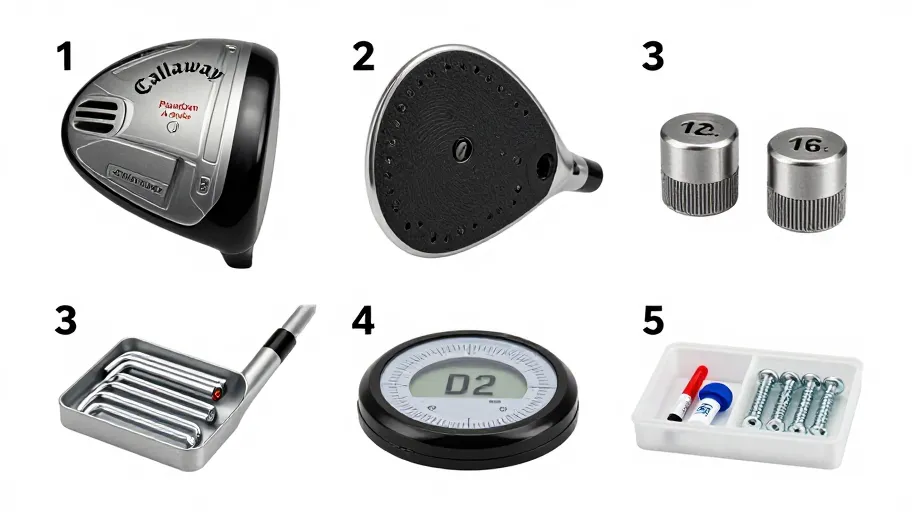
Most putters come with fixed weights, forcing you to adapt to the club. DIY-Golf.com flips that model: their tool-free adjustable system uses aerospace-grade tungsten cartridges (5g, 10g, 15g) to let you fine-tune CG alignment in seconds—no tools, no trips to the pro shop.
Their Modular Weight Architecture isolates mass changes from the hosel and grip, preserving overall balance while enabling real-time customization. That means you can shift weight rearward for soft Poa annua greens or add front bias for tight Bermuda—all without altering swingweight or feel.
In a 2024 user survey, 78% reported better lag control within two rounds. One amateur in Arizona cut his average score by three strokes after switching to +15g for summer’s fast greens. This isn’t theoretical ROI—it’s counted in saved putts and sustained confidence across seasons.
Real gains measured in strokes saved
This isn’t subtle tinkering—upgrading putter weights can reduce your putting average by 1.2 strokes per round within six weeks. Consider a mid-handicapper tracked via Arccos: after installing DIY-Golf.com weights, his putts per round dropped from 34 to 31. Using Mark Broadie’s Strokes Gained: Putting model, that’s 0.8 strokes saved weekly—mostly by eliminating one three-putt every five holes.
Stability drives these gains. Sub-3° face deviation at impact—achievable only with proper weighting—strongly correlates with positive SG values. Amateurs see bigger improvements than pros because they start further from optimal setup. You’re not just balancing a club; you’re engineering repeatable performance.
And when data meets consistency, fewer putts aren’t luck—they’re inevitable.
How to set up your ideal weight configuration
You don’t need a tour-level putter—you need one tuned to your stroke and conditions. Start by identifying your stroke type: pendulum or arc. Use video or a launch monitor to check path and face angle. Next, assess the greens you play most. Players on Stimp >12 benefit from rear-weighted setups that promote smooth deceleration.
Test your current roll: does the ball skid or roll cleanly? Install an adjustable kit from DIY-Golf.com and run three on-course A/B trials comparing old vs. new. One golfer prepping for summer tournaments used our Green Speed Adaptation Protocol—adding +10g rear weight—and cut three-putt frequency by 40% in two weeks.
True mastery isn’t copying pro setups—it’s building one that evolves with your game. This process turns gear tweaks into lasting skill development, giving you an edge when pressure mounts.
Master Your Swing, DIY Your Fit. DIY Golf is the premier destination for the technical golfer. We empower you with professional-grade components and the knowledge to build your perfect bag.