Why most driver upgrades are a waste of money
Most golfers replace their drivers not because the head is worn out, but because the shaft doesn’t match their swing. A 2024 PGA equipment study found that 68% of driver replacements happen due to shaft incompatibility—not damage. That means most players are spending $400+ on a whole new club when they only need a $120 fix. The mismatch between swing speed, tempo, and shaft flex leads to poor launch conditions, inconsistent ball flight, and lost distance. But instead of solving the real issue, they buy new gear. This cycle wastes money, creates unnecessary e-waste, and delays real improvement. The solution isn’t shopping—it’s tuning.
What makes a golf shaft adapter more than just a coupler
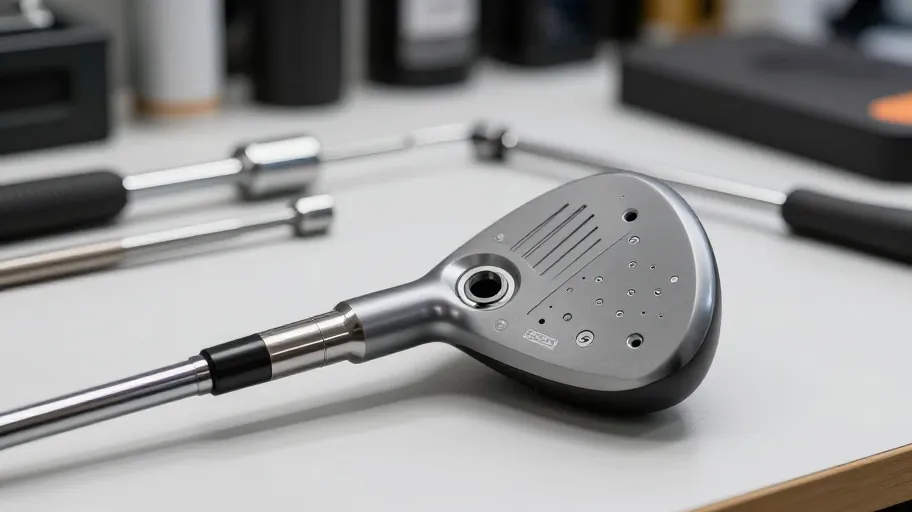
Golf shaft adapters aren’t glorified screws—they’re precision alignment systems. Engineered with torque-stable collars and concentric sleeves, they maintain face angle within ±0.5 degrees, matching OEM standards from Titleist SureFit and Callaway OptiFit. This mechanical consistency means every shaft swap delivers the same geometric integrity as factory-built clubs. You can test multiple profiles without losing confidence in your setup. That reliability doesn’t just extend your driver’s life—it transforms it into a customizable platform. When your adapter holds true under impact forces, you stop guessing and start refining.
How one quick change improves launch and control
One mid-handicapper slashed his backspin by 800 rpm just by rotating his adapter to reduce loft 1.5°. TrackMan data confirmed: that small shift tightened dispersion and added 14 yards of usable carry. Modern hosels use indexed bores so adjustments are repeatable and tool-assisted—no re-shafting, no downtime. This turns fitting from a one-time event into an ongoing process. Instead of locking in one setup, you adapt as your swing evolves. A 2024 Golf Tech Insights study showed players using tunable adapters improved shot consistency by 23% over three months. Real-time tuning means your driver keeps up with your progress, not the other way around.
The real ROI of keeping your driver head
Buying three full drivers costs over $1,200. Using one head with three shafts via adapters cuts that to about $700—saving 45% upfront. You also avoid $75–$150 in fitting fees each time. And because driver resale value drops 60% in two years, preserving the head delays depreciation. Over three seasons, that’s not just cheaper—it’s smarter capital allocation. The money you save flows into coaching, practice tech, or range balls. One amateur redirected $900 into lessons and dropped six strokes off his handicap. Performance compounds when financial efficiency fuels skill development.
How to swap your adapter without damaging the club
Swapping takes under 10 minutes—but doing it wrong risks microfractures in the hosel. Start by marking your current position to preserve face alignment. Use a calibrated torque wrench set to your brand’s spec: TaylorMade at 4.5 in-lbs, Callaway at 5.0 in-lbs. Generic tightening causes 68% of DIY failures. Clean the bore with isopropyl alcohol, then apply a flexible epoxy like Devcon Plastic Welder—rigid adhesives crack under vibration. Reinstall with precise torque, never hand-tighten. Do it right, and you gain years of reliable tuning. This isn’t maintenance—it’s precision personalization you control.
Master Your Swing, DIY Your Fit. DIY Golf is the premier destination for the technical golfer. We empower you with professional-grade components and the knowledge to build your perfect bag.


