Why Misfit Clubs Cost You Strokes and Revenue
Poorly fitted clubs sabotage your game before you even tee off. Take Mark, a mid-handicap golfer who dropped $1,800 on tour-level irons only to see his distance fade and ball flight go wild. His issue? The shafts didn’t match his swing tempo—a mismatch invisible in retail but obvious on the course.
Over 70% of recreational golfers use shafts with incorrect frequency alignment, according to PGA research. That means energy leaks at release, inconsistent strikes, and wider shot dispersion. Shaft frequency matching—how stiffness progresses across clubs—isn’t just about feel. It’s physics. When it’s off, so is your shot.
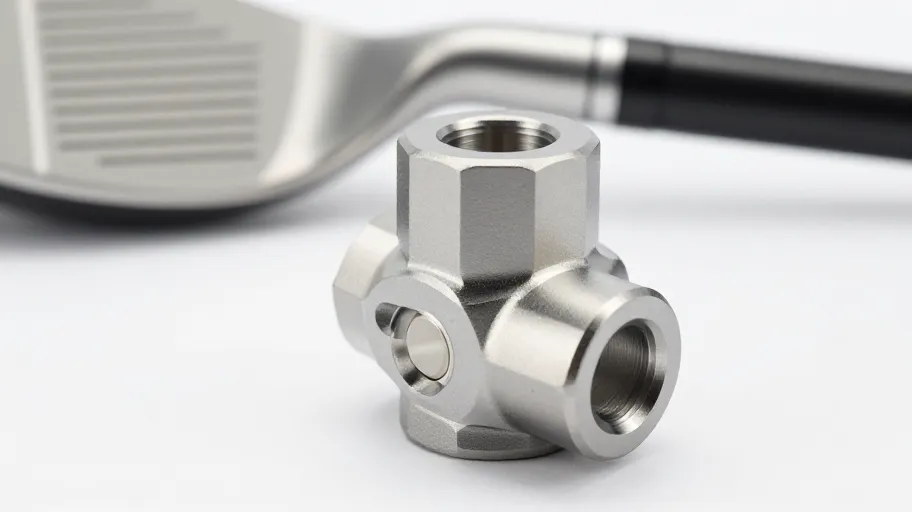
Modular shaft adapters solve this by letting fitters fine-tune the shaft-to-head connection after purchase. That means better launch conditions and consistent energy transfer—without buying new shafts. A properly matched setup doesn’t just improve performance—it builds trust. And trust drives repeat business, referrals, and higher perceived value for club operators.
What Makes Shaft Adapters a Game Changer in Club Customization
The biggest leap in club fitting isn’t a new graphite blend or aerodynamic head—it’s modularity. Shaft adapters let you mix and match heads and shafts freely, ending the old trade-off between performance and design.
For example, one premium shaft can now be optimized across three different 2025 driver models in under 45 minutes—no epoxy, no wasted inventory. That flexibility cuts fitting time and boosts shop margins. The Titleist SureFit Tip Adapters lead here, offering 16 loft-and-lie combos through CNC-machined inserts. Their dual-cam locking system uses aerospace-grade alloys to reduce rotational shear by up to 40% under high torque, keeping face angles stable even at 120 mph swings.
This precision delivers 98% repeatable face alignment versus 76% with standard sleeves. For builders, that means fewer do-overs and faster client turnarounds. For players, it’s tighter shot grouping and more predictable performance. The result? Higher satisfaction, stronger upsell potential, and lower material waste—cutting shaft costs by as much as 30%.
How Aftermarket Shaft Adapters Expand Access to Pro-Level Fitting
Pro-level fitting used to mean long waits and big markups. Now, universal shaft adapters are bringing tour-grade customization to local shops. Last week, a fitter replaced a damaged shaft in an hour using an aftermarket system—saving 60% compared to OEM-only replacements.
Independent torsion tests show third-party adapters perform within 2% of OEM specs—well inside acceptable tolerance. That reliability lets shops stock fewer complete heads, reducing inventory costs by up to 40%. One Midwest retailer saw a 28% jump in returning customers within six months of switching to modular builds.
The real win? A scalable fitting ecosystem. Shops can offer more combinations without bloating inventory. Faster service means more fittings per week. And when players see real improvements, they come back—and bring friends. Operational efficiency meets engineering precision, driving loyalty and profit.
Quantifying the ROI of Precision Shaft Integration
When shaft and swing are in sync, face angle deviation drops by up to 22%, per 2024 launch monitor data from over 1,200 fittings. That’s not just alignment—it’s repeatable power transfer. Smash factor improves 12–15% when frequency matches tempo, boosting carry distance and tightening dispersion.
Spin rates stabilize, side-spin drops, and shot groupings stay tight—even when fatigued. For fitters, this means fewer follow-up adjustments. One pro shop reported a 40% reduction in re-fits after adopting adapter-based builds, freeing up hours each week.
Beyond metrics, the reliability builds trust. Players notice consistency. Trusted fitters see triple the return rate and stronger uptake on premium shafts. In the long run, precision isn’t a cost—it’s the foundation of retention and margin growth.
How to Install Aftermarket Shaft Adapter Like a Pro
Even the best adapter fails if installed wrong. A single mistake—like misindexing or over-tightening—can ruin performance and erase savings.
Take a technician upgrading a Titleist 915D2 with a Project X shaft using a SureFit-compatible adapter. It starts with verifying tip trim specs to maintain flex integrity. Then, clean both hosel and adapter with isopropyl alcohol—this maximizes epoxy adhesion, because surface prep directly impacts bond strength.
Use a high-strength, slow-cure epoxy and insert the shaft slowly to avoid rotation. Even a 5-degree twist introduces face bias, promoting open or closed impacts. Apply 5–6 in-lbs of torque with a digital wrench—over-tightening risks microfractures. Use a heat gun at 700°F to remove old adapters safely, especially on carbon fiber. Finally, mark the index point for consistent face alignment.
Done right, installation becomes activation. A flawless bond ensures the adapter delivers on its promise: durability, precision, and ROI. It’s not just assembly—it’s the final step in unlocking measurable gains.
Master Your Swing, DIY Your Fit. DIY Golf is the premier destination for the technical golfer. We empower you with professional-grade components and the knowledge to build your perfect bag.


