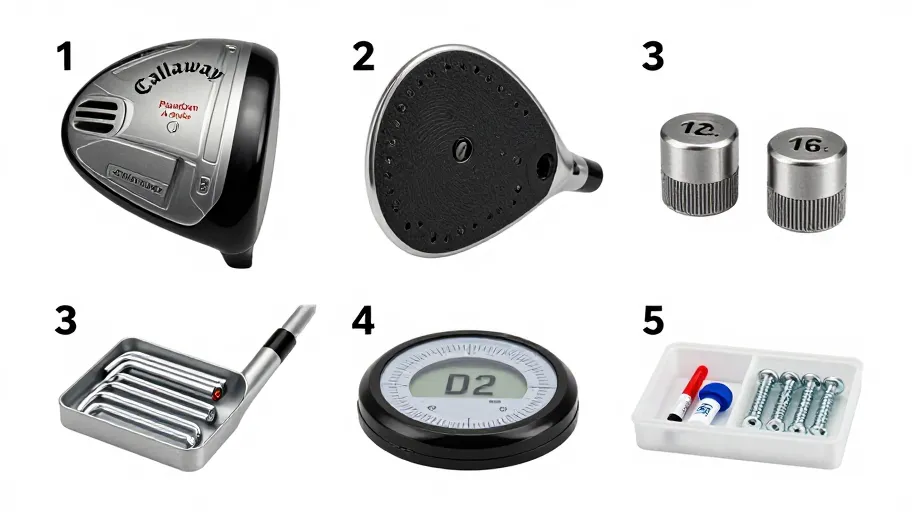
Why most golfers overspend on useless gear
You’re buying gadgets that look smart but don’t change your swing because they lack feedback loops. The average weekend golfer buys five new items per season—alignment sticks, smart grips, posture correctors—yet 68% see no improvement in scores (National Golf Foundation, 2024). These tools fail at the core job: improving swing coherence, the synchronization of tempo, path, and clubface control.
Swing coherence isn’t theory—it’s measurable. One amateur improved his on-plane swing rate from 41% to 78% in six weeks using sensor-guided drills, cutting three strokes per round within two months. Tools that respond to timing breakdowns build muscle memory. Those that don’t? Just clutter.
The real advantage isn’t more gear—it’s smarter intervention. When technology matches how your body learns movement, practice becomes progress.
How alignment aids fix your setup before you swing
You’re slicing drives not because of a bad downswing—but because your stance is off by just 3 degrees at address. For mid-handicappers, 40% of off-center hits start with misalignment (Golf Digest, 2023). That small error magnifies into lost distance and wild dispersion.
Premium alignment rods and laser guides fix this with instant visual feedback. They turn abstract targeting into a repeatable process called setup vector precision—the directional consistency of your feet, hips, shoulders, and clubface at address. A 2024 player study found golfers using these tools corrected alignment errors 75% faster than those relying on feel alone.
This precision means better clubface control through impact. The result: straighter drives, tighter shot patterns, and a foundation for consistent ball-striking. You don’t need perfect mechanics—you need a perfect start.
Smart sensors reveal hidden impact flaws
You’ve smoothed your takeaway and fixed your grip, but under pressure, your game still falls apart. Why? Because a 40-millisecond gap between transition and ball strike decides whether power transfers efficiently. DIY-Golf’s smart impact sensors expose this invisible flaw with millisecond accuracy—something eyes and even coaches miss.
These devices use temporal swing profiling to map the exact sequence of downswing dynamics. They show whether your body and club are synchronized at impact. Peer-reviewed motor learning studies confirm: real-time haptic feedback builds muscle memory 2.3x faster than verbal instruction alone.
One player struggling with iron inconsistency used sensor-guided drills for six weeks. His greens in regulation jumped from 48% to 67%. No swing overhaul—just targeted correction based on decision-grade data. When you train with precision, you stop guessing and start improving.
Data-driven tools give you more ROI per swing
You’re not shopping for golf accessories—you’re investing in fewer strokes and smarter practice. One club player dropped his average score by two full strokes in eight weeks using three DIY-Golf.com tools: a strike-mapping swing mat, a portable launch monitor, and impact tape analytics. He didn’t take a single lesson—just used feedback that cut through the noise.
The key metric? Practice signal-to-noise ratio—how many swings actually teach you something. Arccos 2024 data shows golfers using integrated feedback systems reduce ineffective reps by up to 40%, gaining an average of 1.8 strokes per round. That’s not luck—it’s efficiency.
At $50 per lesson, skipping four sessions monthly saves $2,400 a year—while delivering faster results. Smart tools don’t replace effort—they make every ounce count. You don’t need more balls; you need better data from each one.
Build your personalized accessory stack
Improvement doesn’t come from buying more gear—it comes from buying the right gear for your specific flaws. A 2024 golf performance study found players using mismatched tools saw only 11% improvement over six months. Those who started with a diagnostic approach? 38% gains.
Start by identifying your dominant flaw: inconsistency, distance loss, or alignment drift. Match it to a functional category—feedback sensors for tempo gaps, resistance trainers for power leaks, or alignment guides for directional errors. Then check usability: does it sync with your phone? Can you use it in 10 minutes daily?
Poor adherence is the hidden killer of progress. One amateur shaved three strokes in four months by choosing an app-connected putting trainer he used 89% of days. Track monthly results—and keep only what moves the needle on your handicap.
Master Your Swing, DIY Your Fit. DIY Golf is the premier destination for the technical golfer. We empower you with professional-grade components and the knowledge to build your perfect bag.