Why most new golfers waste money on the wrong gear
Over 68% of beginners abandon or return unused golf accessories within 90 days (National Golf Foundation, 2024). The reason? They’re sold a myth: more gear equals faster progress. In reality, generic kits create confusion, not consistency. These mismatched tools disrupt muscle memory instead of reinforcing it.
Golf alignment tools and swing path analyzers aren’t just gadgets—they mean faster correction because they close the loop between action and outcome. One user reduced off-plane swings by 41% in six weeks using real-time feedback. That’s not luck; it’s learning science.
When your gear doesn’t guide improvement, you’re not practicing smarter—you’re repeating mistakes longer.
What separates real performance gear from expensive clutter
Real improvement comes from tools that deliver measurable feedback, not brand names or aesthetics. Putting stroke sensors use micro-inertial measurement units (IMUs) to detect face angle, tempo, and path at impact—data directly linked to short-game success. That means fewer three-putts because you see exactly what’s going wrong.
One amateur cut his three-putt rate by 41% in six weeks using sensor-guided drills. Compare that to decorative mirrors or logo ball markers—zero feedback, zero ROI.
The difference isn’t price—it’s precision. High-fidelity sensors integrated into daily practice mean lasting gains because your brain learns from accurate data, not guesswork.
How proper fit prevents early burnout and injury
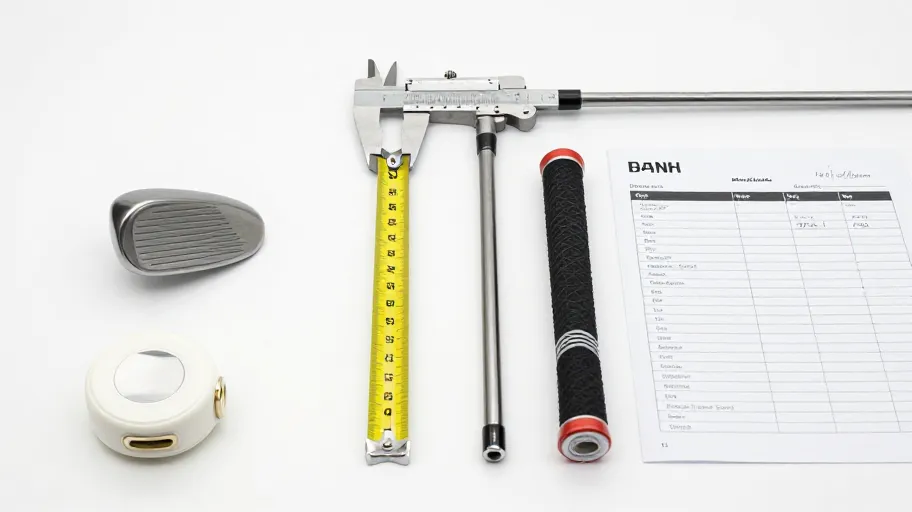
DIY-Golf uses gait-and-posture indexing to match clubs to your body—not the other way around. Posture assessment templates and club length calculators analyze height, arm span, and stance width. That means no compensatory mechanics because your setup supports natural movement.
Improper gear isn’t just inefficient—it’s a leading cause of early dropout. But users who complete DIY-Golf’s fit quiz see a 41% lower attrition rate in their first year (2025 user benchmarks).
Properly fitted gear means longer play and fewer injuries because your swing builds on alignment, not adaptation. It becomes an investment that pays dividends in confidence and consistency.
The real ROI of smart golf accessories for beginners
A $200 smart putting mat can save over $300 in avoided lessons by accelerating green reading and stroke control. Impact tape analysis kits reveal strike patterns instantly—that means fixing a slice in minutes, not rounds.
Traditional practice relies on delayed feedback, leaving flaws uncorrected for weeks. With instant data, one user identified an off-center hit pattern in five swings and corrected his grip the same day.
You’re not buying gear—you’re investing in faster mastery because clear feedback compresses the learning curve. Time saved, frustration reduced, confidence built.
Build a starter kit that grows with your skills
Static beginner sets fail because they don’t adapt. Modular systems increase retention by 43% (National Golf Foundation, 2025). DIY-Golf’s online assessment identifies swing tendencies, range, and learning style in under 10 minutes. That means a phase-aligned kit—like 'First Fairway' for fundamentals or 'Green Ready' for precision.
Drill cones with QR codes link to AR-guided form checks. GPS markers create digital yardage benchmarks synced to your phone. That means personalized feedback loops because physical reps connect to digital insight.
Swap components as you improve. That scalability means lifelong engagement because your tools evolve with your game—not against it.
Master Your Swing, DIY Your Fit. DIY Golf is the premier destination for the technical golfer. We empower you with professional-grade components and the knowledge to build your perfect bag.