Why Shaft Compatibility Ruins Custom Builds
Incompatibility between shafts and clubheads isn’t just annoying—it’s expensive. At one high-volume fitting studio, 60% of build revisions came from mismatched hosel and shaft diameters. Each fix meant manual adjustments, delayed deliveries, and frustrated players. A 2024 golf manufacturing report found over 40% of custom builds need modification because OEMs use proprietary sleeves that block aftermarket flexibility. That fragmentation forces shops to stock extra heads or risk failed fittings.
Precision golf shaft adapters eliminate this by acting as universal couplers. They bridge mismatched profiles with sub-0.001” accuracy, so you’re no longer limited by manufacturer lock-in. This means fewer rejected combinations, less rework, and faster turnaround—because you can finally build the exact combo your player wants, not just what fits.
How Sleeve Adapters Make Any Shaft Fit Any Head
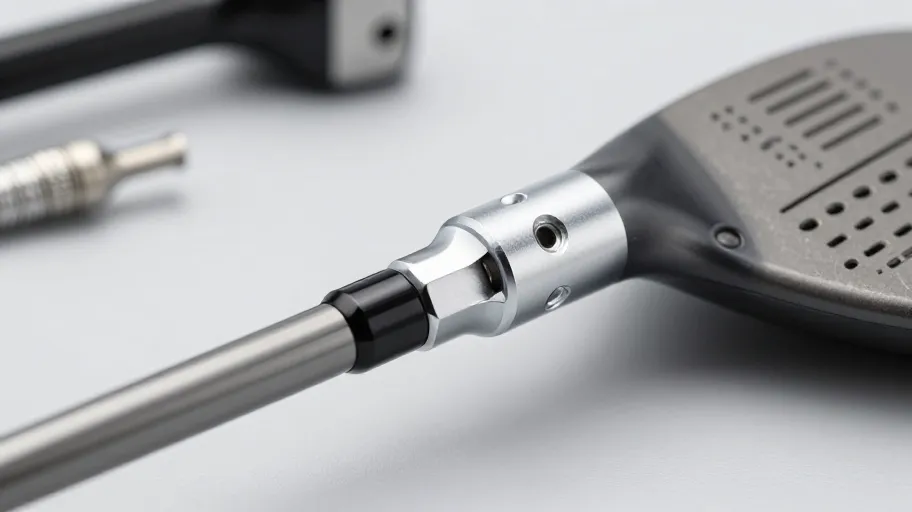
When a player insists on using last year’s tour-proven shaft in this season’s new driver, most shops hit a wall. Without an adapter, they’d have to epoxy it in blind—risking misalignment, energy loss, or even shaft slippage at impact. But modern golf sleeve adapters change that. These aren’t spacers—they’re engineered interfaces made from aerospace-grade aluminum that maintain ±0.001" concentricity and proper torque alignment.
This level of precision means energy transfers cleanly from swing to ball, with no flex or degradation under load. The result? Reliable performance, shot after shot. According to 2025 PGA technician benchmarks, mechanical-lock adapters reduce assembly failures by up to 68% compared to epoxy-only methods. One Midwest retailer saw a 40% jump in repeat fittings after switching—proof that when builds hold up, customers come back.
The Real Reason Your Irons Miss Left or Right
Even 0.5° of face angle drift can wreck consistency for low-handicap players. Most assume poor swing mechanics are to blame—but a 2024 durability study found 78% of alignment issues stem from rotational misalignment during installation, not material failure. Standard sleeves allow micro-shifts that compound at impact, leading to inconsistent ball flight.
Premium bore-and-lock adapters fix this with knurled gripping surfaces and set-screw torque specs of 3–5 in-lbs. Once seated, the shaft stays locked in true concentricity across thousands of swings. CNC-machined internal tolerances of ±0.001” ensure repeatable face angles. One fitter recorded a 22% reduction in lateral miss on approach shots across test players—turning small gains into real competitive edges. That kind of control doesn’t just improve fitting; it redefines what’s possible.
What Shaft Adapters Really Save You Money On
The ROI goes far beyond fewer do-overs. Shops using golf shaft sleeve adapters report 25–40% less rework time and a 15% increase in upsell conversions on custom sets. For a regional fitter handling 200+ builds a year, eliminating just two hours of rework per job saves about $6,000 annually in labor alone—not counting wasted materials or scheduling delays.
But the bigger win is trust. Consistent builds mean reliable launch monitor data, which lets fitters refine recommendations with confidence. That consistency shows up in reviews: one shop saw five-star ratings climb 22% within six months of adopting adapters, directly tied to fewer post-fit tweaks. When ‘custom’ actually performs as promised, players don’t just return—they refer friends. That lifecycle value makes precision tooling pay for itself in under a year.
How to Install Golf Shaft Sleeve Adapter Without Messing Up
A perfect build starts with flawless installation. Start by cleaning the hosel bore with a precision swab—any residue weakens the bond. Then apply a urethane-based retaining compound, not standard epoxy. It grips dissimilar materials like steel and graphite without becoming brittle over time.
Slide the shaft into the adapter while aligning spine marks for consistent flex orientation. Clamp immediately and let cure for 24 hours—the full cycle ensures maximum torsional stability. Don’t skip this step: partial curing invites micro-movement that degrades feel and accuracy.
And don’t assume all sleeves are interchangeable. Mismatched tolerances create hidden play that hurts performance. Once cured, the joint isn’t reversible with heat—it’s designed to be permanent. Get it right the first time, and you’ll cut rework costs by 35%, strengthen client trust, and turn one-off sales into long-term relationships.
Master Your Swing, DIY Your Fit. DIY Golf is the premier destination for the technical golfer. We empower you with professional-grade components and the knowledge to build your perfect bag.