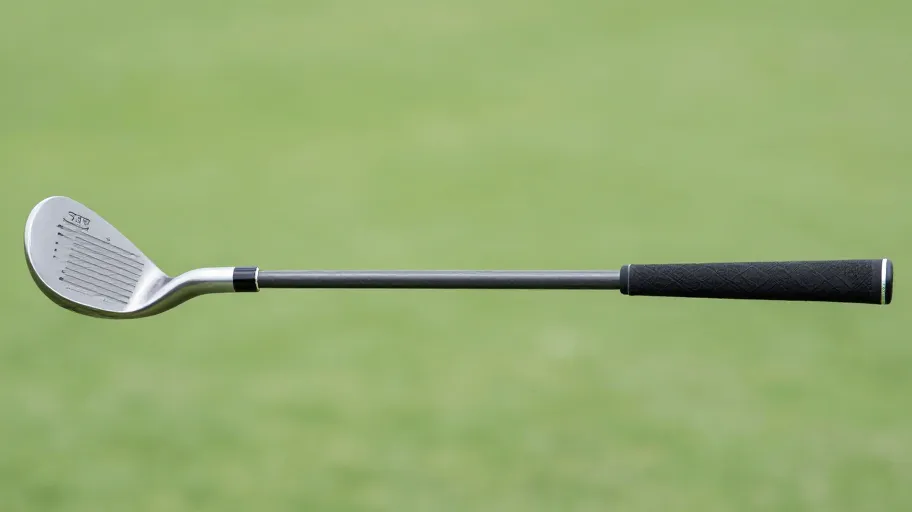
Reviewing the first sample of a rebuilt or re-spec'd club starts with one question: does the assembled balance match the documented target? Use the SAMPLE Gate — Set a swing weight target, Assemble the full build, Measure and record, Physically review the sample, Engage the supplier with written questions. Approve only when measurements and feel agree with your written spec.
What swing weight actually tells you
Swing weight is a balance measurement of the assembled club — head, shaft, grip and everything else in place. It is not a measure of total weight, shaft stiffness or quality. Two clubs can have identical swing weights and feel entirely different because total weight, balance point and shaft profile differ.
That distinction matters at first-sample review. If your brief to the supplier or your own build plan specified a balance point, do not treat a matching swing weight alone as approval. The SAMPLE Gate keeps the review honest.
The SAMPLE Gate framework
S — Set a swing weight target. Before the sample exists, write down the intended swing weight range and the component combination you expect to produce it: head model, shaft model and weight, grip model and weight, and any added tip or butt weighting. Without this document, the sample review becomes an opinion contest.
A — Assemble the full build. Measure only a complete club. A bare shaft or an un gripped assembly will not give you a comparable reading, and any adjustment you approve mid-assembly can disappear once the grip goes on.
M — Measure and record. Use the same scale and the same procedure every time. Record the reading, the assembled length, the grip, and any lead tape or weighting added during the check. Photos of the setup make the record easier to defend later.
P — Physically review the sample. Swing it. Compare it against your reference club, ideally the model you are tuning or replacing. Note where the balance lands relative to that reference, not against an abstract number alone.
E — Engage the supplier with written questions. Send your measurement record and ask the supplier to reconcile any gap before you approve a broader order. Approve in writing; do not approve verbally.
Decision table: balance goal to component lever
| Balance goal | Component lever | What to measure | What to confirm with the supplier |
|---|---|---|---|
| Heavier head feel | Head weight or added tip weighting | Swing weight change per increment, assembled length | Which weighting options exist for your exact head model |
| Lighter overall feel with same balance | Lighter shaft, heavier grip compensation | Total weight, swing weight, balance point | Shaft weight options in your model's fitment |
| Slightly lighter balance | Grip weight increase | Swing weight delta, grip weight | Grip weight variants and their fitment |
| Address a head-heavy sample | Butt-side weighting | Swing weight before/after, feel comparison | Whether weighting affects the build you ordered |
| Match a reference club | Full assembled spec comparison | Length, swing weight, total weight, balance point | Whether supplied components match the documented spec |
First-sample review checklist
- Written swing weight target and component list exist before measurement
- Sample measured as a fully assembled club
- Same scale and procedure used as prior measurements
- Reading, length, grip and any weighting recorded with photos
- Sample compared by feel against the reference club
- Gap between target and sample documented, if any
- Written questions sent to supplier before approval
- Approval decision recorded as pass, hold or fail
Outcome: Pass — approve and record the spec. Hold — ask written questions and remeasure after response. Fail — document the gap and restart the component comparison.
Approval questions to send with your record
- Does this sample match the component specification we documented, including shaft and grip model and weight?
- What produced the measured swing weight, and were any adjustments added during assembly?
- Which component variables can be changed for the next sample if the reading misses the target?
- Confirm the current policy directly regarding any sample, cost or shipping arrangements for revisions.
- Confirm the current policy directly on how revisions are handled before a broader order.
Natural FAQ
Is a higher swing weight better? No single value is better. A heavier balance can feel more stable to some golfers and sluggish to others. Compare against your reference club and document which direction you prefer before adjusting components.
Can I fix swing weight with grip changes alone? Grip weight can shift the reading, but the effect depends on the full assembly. Record what changed and remeasure the complete club before drawing conclusions.
Why did my rebuild finish at a different swing weight than the original? Any component change — head, shaft, grip, length or added weighting — can move the balance. The SAMPLE Gate exists precisely to catch this before approval, by comparing the assembled measurement against your written target.
Should I approve a first sample that feels right but measures off-target? Hold, not pass. Record both facts and ask the supplier to reconcile them. Feel is evidence; the measurement record is the approval basis.
Do I need a launch monitor to review a sample? Not for balance review. A consistent scale, a documented procedure and your reference club cover the swing weight question. Performance testing is a separate step with its own evidence.
Next step
Compare component options with your current club spec — pull your documented swing weight, length and component list, and set them side by side with the replacement components you are evaluating. That single comparison is the fastest way to see which lever moves your build where you want it.
Prefer to start smaller? Use the first-sample review checklist above as your worksheet for the next sample, and keep the written record as your approval baseline.
Master Your Swing, DIY Your Fit. DIY Golf is the premier destination for the technical golfer. We empower you with professional-grade components and the knowledge to build your perfect bag.


