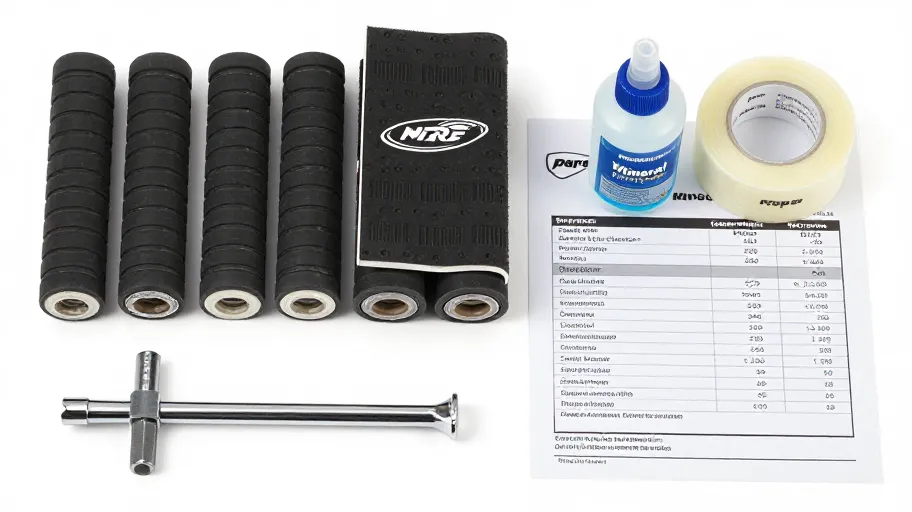
A useful "average cost to regrip golf clubs" figure should make clear what sits inside the number: grip grade, per-club labour, tape and solvent, shaft preparation, ancillary charges and turnaround terms. Without that breakdown, an average cannot be compared against any specific quote, set size or club model. Use the Quote Transparency Framework below to decompose, verify and approve.
Why one average number cannot carry a sourcing decision
When a golfer or club builder searches for the average cost to regrip golf clubs, the real job behind the query is procurement preparation. The reader wants to know whether a quote they receive — or a components order they are planning — is complete, comparable and safe to approve. A single blended figure answers none of those questions, because it folds together variables that belong to the reader's specific project:
- Grip grade and model. Replacement grips span a wide range of materials and constructions; the model chosen for a specific club family changes the quote materially.
- Set composition. A partial wedge refresh, a full iron set and a complete bag including putter are different jobs with different grip counts and shaft-prep needs.
- Labour model. Self-build, bench work by an independent builder, and shop-fitted service each carry different cost structures that an average merges into one number.
- Ancillary items. Double-sided tape, solvent or activation method, extension work, butt-trim adjustments and old-grip disposal may or may not be itemised.
- Turnaround and terms. Scheduling, approval checkpoints and revision handling are part of the commercial picture even when they are not part of the headline price.
The productive move is not to chase a better average. It is to convert the average into a structured request so every quote you compare is built on the same scope. That is what the QTF exists to do.
The Quote Transparency Framework (QTF)
The QTF is six scope categories. Any credible regrip quote — whether for a single club or a whole set, and whether you are buying components to install yourself or commissioning the work — should let you document each category explicitly. Where a supplier or service provider does not volunteer the information, you ask.
1. Scope. Which clubs are included, identified by brand, family, model, loft or specification, and how many grips in total. Scope is the denominator of every per-club figure; without it, no comparison is valid.
2. Labour. What the labour line covers per club: removal of the old grip, cleaning of the shaft, tape preparation, installation and final inspection. Ask whether labour is quoted per club, per set or per hour, and what triggers a revision charge.
3. Materials. The exact grip model, size (undersize, standard, midsize or plus), core diameter and texture variant written into the quote — not a grade descriptor. If you are sourcing components yourself, the same fields become your purchase specification.
4. Ancillary costs. Tape, solvent or activation supplies, shaft-cleaning consumables, extensions, disposal of removed grips and any tooling charges. Ask for each as a separate line, even when the supplier bundles it.
5. Turnaround terms. Scheduling windows and approval checkpoints stated as questions to confirm — this article does not assert any duration, because none was supplied and none applies universally. Confirm current terms directly.
6. Evidence. What the supplier provides on completion: photographs of installed grips, a written record of the grip model and size fitted to each club, and confirmation that fitment matched the shaft butt specification for the club family in question. Evidence is what lets you close a project file and defend the work later.
Decision table: comparing quotes on a like-for-like basis
Use this table to normalise two or more quotes before approving anything. Every cell should be filled with a written answer from the supplier, never an assumption.
| QTF category | Quote A | Quote B | What "clear" looks like | Risk if unstated |
|---|---|---|---|---|
| Scope | record | record | Club list by brand, family, model; grip count | Different denominators make per-club figures meaningless |
| Labour | record | record | Per-club basis; steps included; revision trigger | Post-approval add-ons for prep work |
| Materials | record | record | Exact grip model, size, core, texture variant | Fitment mismatch with your shaft butt diameter |
| Ancillary costs | record | record | Itemised tape, solvent, disposal, extensions | Bundled charges surface at invoicing |
| Turnaround terms | record | record | Confirmed scheduling and approval checkpoints stated by supplier | Planning gaps and unplanned delays |
| Evidence | record | record | Written record + photos of installed grips | No documentation trail for the model fitted |
No row in this table can be completed from a published average. That is the point: the average is a starting signal, and the QTF is what turns it into a decision.
Fitment and compatibility questions per club brand, family and model
Fitment is where regrip projects go wrong, and where averages are silent. Before approving any quote or placing a component order, document answers to these questions for your exact clubs:
- What is the butt diameter of the shaft on each club model in the set, and does the specified grip core match it?
- Are any shafts in this club family built with unusual butt constructions that change grip installation?
- Is the intended grip model available in the size that matches your hand measurement and the club's specification?
- Does the grip model require a specific tape build-up or activation method the installer must follow?
- For a mixed set spanning more than one club family, does each subset need a separately confirmed specification?
Do not accept a compatibility claim on trust. Ask the supplier or component vendor to confirm in writing that the grip model and size suit the exact club brand, family and model you listed, and keep that confirmation with the quote. If current first-party evidence for the exact product and model is not available, treat the item as unverified and resolve it before approval.
Supplier approval questions
These are the questions to put directly to any supplier or service provider. None of them can be answered by this article, because no pricing, sample, shipping or production policy was supplied, and policies vary and change:
- Please itemise the quote across all six QTF categories, with each ancillary item as its own line.
- What is your current policy on samples or trial grips for the model I am considering, including any fee and its terms? Confirm current policy directly.
- What grip model, size, core diameter and texture variant will be fitted to each club, recorded in writing?
- What scheduling and approval checkpoints apply to this job, and what happens if a specification needs revision mid-project?
- What documentation will I receive on completion, and does it include a per-club record?
- What are your current shipping, returns and post-installation support policies for the components in this quote? Confirm directly before approving.
Frequently asked questions
Why do published figures for the average cost to regrip golf clubs vary so much? Because they blend different grip grades, set sizes, labour models and ancillary scopes into single numbers. Two quotes can differ by scope rather than by value. Decompose each with the QTF before comparing.
Should I plan on a per-club or per-set basis? Ask each supplier to quote both ways and to state the grip count explicitly. The per-club figure is only meaningful once the scope — clubs by brand, family and model — is documented.
How do I confirm a grip fits my specific club model? Record the shaft butt specification for each club, match it against the grip core and size, and ask the vendor to confirm compatibility in writing for the exact product and model. Without that confirmation, treat fitment as unverified.
What evidence should I hold after the work is done? A per-club written record of the grip model and size fitted, photographs of the installed grips, and the supplier's written fitment confirmations. This documentation is what makes a future replacement or warranty conversation straightforward.
Can I use this framework when sourcing components for self-installation? Yes — scope, materials specification, ancillary supplies, terms and evidence map directly onto a components order, with you as the approver of each line.
Prepare your quote comparison
Turn this framework into an enquiry you can send today. 下载核对清单 to get the full QTF checklist, the comparison table and the supplier approval questions in one document.
If you are still in the research phase, start smaller: copy the six QTF categories into a note and fill in what you already know about your set. Download the one-page regrip quote checklist when you are ready to send the first structured enquiry.
Master Your Swing, DIY Your Fit. DIY Golf is the premier destination for the technical golfer. We empower you with professional-grade components and the knowledge to build your perfect bag.


