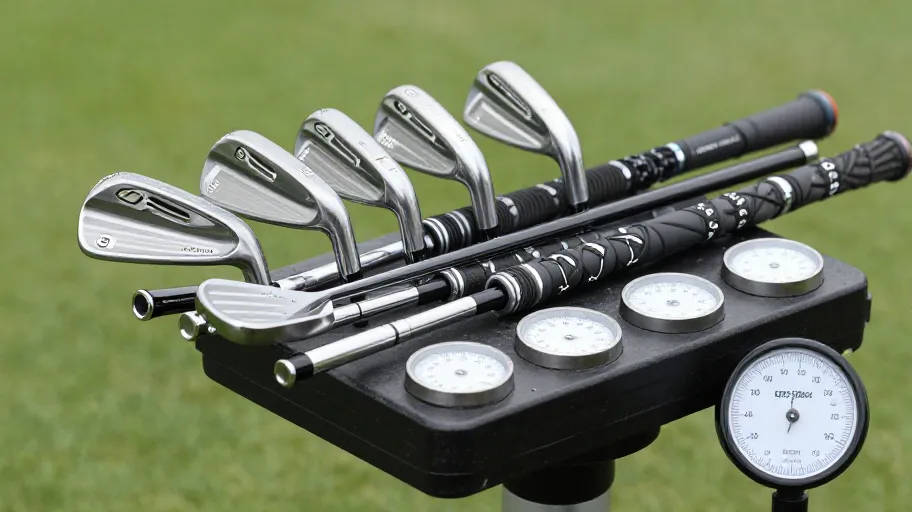
A useful statement about Rory McIlroy's iron swing weight should make three things clear: where the figure came from, when it was current, and whether it applies to your component build at all. Without those three clarifications, the number is trivia. With them, it becomes a reference point you can document, compare and — where relevant — build toward with verified components.
Apply SPEC-Check to every quoted figure
When a swing-weight figure for a tour player's irons reaches you through a forum post, a broadcast graphic or an article, run it through SPEC-Check:
- S — Separate speculation from evidence. Ask whether the figure was measured, published by the player's team, or estimated from visible equipment. Label each figure you collect as verified, secondhand or estimated.
- P — Prioritise what affects your build. Your head model, shaft, grip, length and even grip tape layers change the assembled swing weight. A tour figure cannot be copied component by component.
- E — Evidence in writing. Whatever target you settle on, request the supporting assembled-spec documentation from your component supplier before approving an order.
- C — Confirm before you commit. Verify that the components quoted can actually reach your target in your intended assembly, in writing, for your exact model and specification.
The value of any Rory McIlroy iron swing weight figure is not that you should match it. It is that it gives you a documented benchmark to compare against your own measured, verified build.
Swing weight is an assembly property, not a component property
This is the point most research sessions miss. Swing weight is a balance measurement of the finished club — head, shaft, grip, length and build method together. That has two practical consequences for a component project:
- A swing-weight figure quoted for a tour player describes that player's assembled clubs at that moment, with that shaft, that grip and that playing length. It does not describe any single component you can order.
- When you source components, the meaningful specifications to request are the ones that determine assembled swing weight in your build: head weight as supplied, shaft weight and trim guidance, grip weight, and your intended final playing length. Ask DIY-Golf to state each of these for the exact component family and model you are quoting, and confirm them in writing.
If your goal is to build toward a documented target — whether inspired by a tour benchmark or set with a fitter — the professional path is to define the target, then verify each component's contribution against it.
Decision table: evaluating a quoted swing-weight figure
| Evaluation question | Strong answer | Weak answer | Action on weak answer |
|---|---|---|---|
| Is the source named and current? | A dated, attributable measurement or team statement. | "Reported", anonymous, or undated. | Mark the figure as unverified; do not anchor a build sheet to it. |
| Does the figure describe an assembly? | Full build context: head, shaft, grip, length. | A bare number with no context. | Treat as reference only; request assembled-spec data for your own build. |
| Does your supplier confirm component weights in writing? | Head, shaft and grip weights stated for your exact model in the quote. | Approximate categories or "will vary". | Ask for written per-component weights before approving. |
| Can the target be reached and checked? | Supplier agrees to a stated assembled target and a measurement method on delivery. | No acceptance criteria offered. | Define acceptance criteria in the order confirmation. |
| Is build method addressed? | Grip, tape and length assumptions documented. | None mentioned. | Specify your build assumptions in writing. |
Approval questions to send before ordering
Put these questions to DIY-Golf — or any component supplier — and approve the order only when the answers are in writing for your exact component family and model:
- What is the supplied head weight for the exact head model I am quoting, and how is it stated on the invoice?
- What shaft weight and trim guidance applies to my intended playing length?
- What grip weights are available for this model family, and how does each affect the assembled swing weight?
- Can you confirm, in writing, whether the quoted combination can reach my stated swing-weight target in my build?
- What measurement and acceptance criteria will apply when the components ship, so I can verify on arrival?
- What is your current policy on samples, cost, shipping, and adjustments if delivered components do not match the agreed specification? (Confirm the current policy directly — do not rely on assumptions or third-party summaries.)
- What tolerances do you state for head weight on this model, and how will they be documented?
These questions do not presume any policy. They convert unknowns — tolerances, sample terms, acceptance criteria — into supplier-confirmed facts attached to your specific project.
Frequently asked questions
Is Rory McIlroy's iron swing weight a good target for an amateur build? It is a reference point, not a recommendation. His assembled swing weight reflects his heads, shafts, grips, lengths and swing. Verify your own target against your components, measurements and, where possible, a fitting session before committing.
Why do different sources quote different figures for the same player? Equipment changes across seasons, and some figures are measured while others are estimated. That is precisely why each figure should be labelled with a source and date before you use it as a benchmark.
Can I match a swing-weight target by changing only one component? A swing weight is a property of the assembled club, so any change — head weight, shaft, grip, length or build method — shifts the balance. Ask your supplier to confirm the assembled outcome of the exact combination you intend to order.
What should a component quote include so I can verify swing weight on arrival? Supplied head weight, shaft weight, grip weight, intended playing length, your stated target, the measurement method, and the acceptance criteria you both agreed in writing.
How do I compare two suppliers quoting the same components? Compare the completeness of the documentation, not just the components listed. The quote that states weights, tolerances, acceptance criteria and policy terms explicitly is the one you can verify against on delivery.
Get the checklist
Before you approve any component order, work through the full set of verification points — source labelling, component weights, acceptance criteria and policy confirmations.
Prefer to start smaller? Use the seven approval questions above as a one-page request template, send them to your supplier, and keep the written answers with your project file.
Master Your Swing, DIY Your Fit. DIY Golf is the premier destination for the technical golfer. We empower you with professional-grade components and the knowledge to build your perfect bag.


