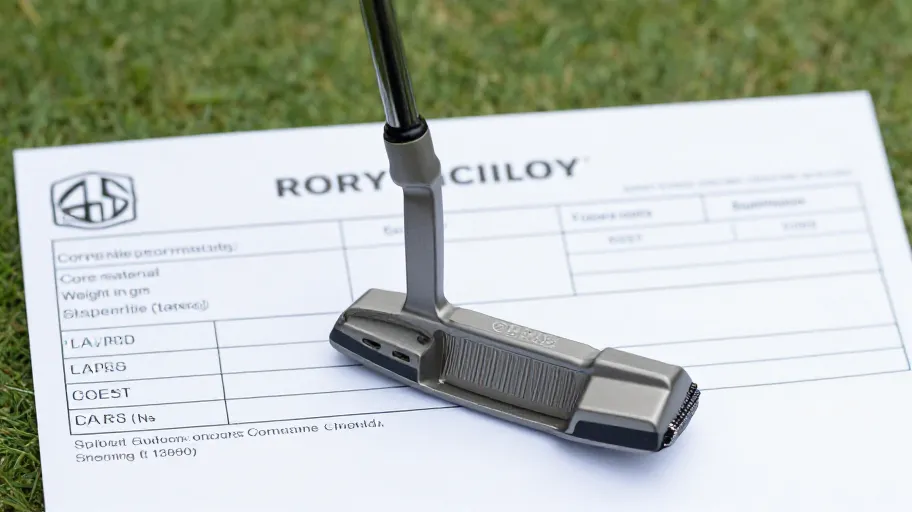
A useful "rory putting grip" quote makes three things clear before you commit: that the grip fits the exact shaft butt and putter model you are building for, that its measurable specifications (core, weight, shape, length) are stated in comparable terms, and that the supplier has confirmed current terms for samples, cost and shipping in writing. Anything less leaves you comparing names rather than components. Work through the FIT–SPEC–APPROVE framework below, and record every answer against the product you intend to buy.
Why descriptive grip names are not specifications
When a listing references a tour player's putting grip, it is describing a look or a lineage — a pistol shape, a certain taper, a particular feel. It is not describing a component you can verify. For a club builder or component buyer, the gap between the name and the spec is where sourcing errors happen: a grip that visually matches but arrives with a different core, weight or profile will change the build you deliver.
The FIT–SPEC–APPROVE framework keeps that gap under control:
- FIT. Confirm the grip matches the shaft butt diameter and the putter family and model you are working on, using dimensions you record yourself — not assumptions carried over from a previous build.
- SPEC. Require the supplier to state measurable parameters: core size, grip weight, overall length, outer profile at the top and bottom, and surface texture description. Compare quotes only on these terms.
- APPROVE. Before approving, confirm commercial and technical terms directly: current sample policy, whether any sample fee applies and on what terms, shipping arrangements, and confirmation that the quoted item is the exact model and revision you evaluated. Confirm each point in writing for the specific order.
Decision table: what to record before comparing grip quotes
| Parameter | Why it matters for a putter build | What to record | Risk if unconfirmed |
|---|---|---|---|
| Core diameter | Determines whether the grip seats correctly on the shaft butt. | Measured shaft butt diameter; stated grip core. | Grip slides, wrinkles or fails to seat. |
| Grip weight | Affects overall build weight and feel balance. | Stated weight in consistent units from each supplier. | Final build deviates from intended balance. |
| Shape and taper (e.g., pistol-style profile) | Drives hand position and feel; descriptive names vary between suppliers. | Profile description plus top and bottom outer dimensions. | Shape differs from the reference grip you intended to match. |
| Length and cap design | Affects install position and alignment markings. | Total length and cap construction. | Alignment line placement differs from plan. |
| Texture and material description | Influences feel and durability expectations. | Supplier's stated material and finish per quote. | Finish differs from what you evaluated in a sample. |
| Exact model and revision | Prevents substitution between visually identical items. | Full product code and revision from the supplier, in writing. | You receive a variant you never tested. |
Treat any row a supplier cannot fill as a gap in the quote — not as something to assume.
Approval questions to put to the supplier
Use these questions verbatim, and attach the answers to your project file:
- Which exact product code and revision does this quote cover, and is it the same item you will ship?
- What is the stated core diameter, weight, length and profile for that exact item?
- Does it match the shaft butt diameter and putter family I have specified? Please confirm against the measurements I have provided, not a general fitment guide.
- What is your current sample policy: is a sample available, does a fee apply, and on what terms? What are the current shipping arrangements and charges?
- If the delivered item differs from the quoted specification, what is your process for resolving it?
- Which specifications of this item have you verified, and which are catalogue descriptions I should independently confirm?
The final question matters most. A supplier that distinguishes verified data from catalogue copy is giving you something you can build on.
What this article cannot confirm for you
No article, including this one, can confirm compatibility, fitment, stock, price, shipping terms, returns, material composition or performance outcome for a specific grip on a specific putter. Those facts change by product, batch and supplier policy, and they must be confirmed in writing for the exact model you are buying. Where a sample matters to your decision, confirm the current policy on samples, fees and shipping directly with the supplier rather than relying on any summary — including this one.
FAQ
Does a tour-player grip name guarantee a particular shape or size? No. A name is a description, not a specification. Ask the supplier for the measured profile, core and weight of the exact item, and compare those numbers across quotes.
How do I compare two grip quotes that look the same? Compare only stated, measurable parameters — core diameter, weight, length, profile dimensions and material description — plus confirmed commercial terms. If one quote omits a parameter, ask for it before treating the quotes as equal.
What should I measure on my putter before requesting a quote? Record the shaft butt diameter, the putter family and model, and your intended build weight target. Give these to the supplier and ask them to confirm fitment against your measurements.
Can I rely on a supplier's statement that a grip "fits most putters"? Treat it as an unverified claim until the supplier confirms fitment against your recorded shaft diameter and model in writing. Verify, then document.
What if the sample I receive differs from the quoted item? Compare the sample against the written quote you approved. Any difference in core, weight, profile or finish is grounds to pause the order and ask the supplier to reconcile the discrepancy before you proceed.
Before you contact any supplier
下载核对清单 — download the checklist and complete it for each grip you are evaluating. It contains the FIT–SPEC–APPROVE worksheet, the decision table fields to fill per quote, and the approval questions in a copy-ready format.
Quick start, no sign-up friction: open the checklist, fill the six decision-table rows for one candidate grip, and you already have a structured comparison you can send to any supplier today.
Master Your Swing, DIY Your Fit. DIY Golf is the premier destination for the technical golfer. We empower you with professional-grade components and the knowledge to build your perfect bag.


