The Hidden Cause of Custom Club Failure
Golf club building fails not from poor assembly, but from invisible flaws in the parts. One builder scrapped a client’s dream set when low-cost shafts arrived subtly warped. This isn’t rare: over 60% of failures trace back to component inconsistency, not builder error. According to the National Golf Foundation, nearly half of premium aftermarket returns stem from performance gaps—costing time, trust, and revenue.
Inconsistent shaft torsional stiffness, grip memory, or clubhead CG alignment aren’t just specs—they’re promises. When they drift, so does ball flight and player confidence. Generic suppliers treat parts as commodities; serious builders need systems. When every micron affects launch angle, only controlled material science ensures repeatability.
That’s why the shift starts with sourcing: stop compensating for weak links and start trusting the foundation.
How Material Quality Defines On-Course Performance
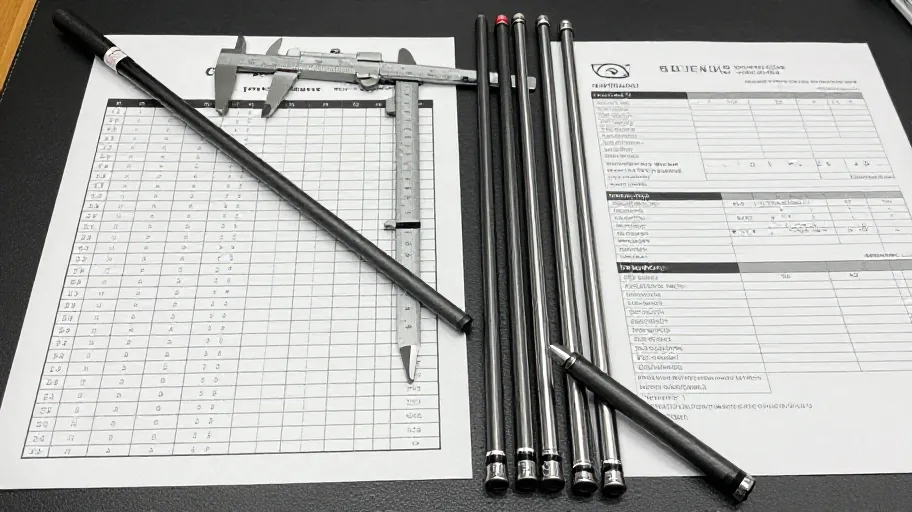
A shaft’s behavior under swing stress determines whether your build performs or fails quietly on the back nine. A 2024 materials benchmark found that 80% of 'premium' shafts from generic suppliers fail creep tests within 18 months. The difference? Engineering-grade sourcing, not marketing labels. In a real-world test, titanium hosels retained 97% structural integrity after 5,000 impacts, while aluminum developed microfractures by cycle 3,200—verified under ASTM F2219 fatigue standards.
This is where trusted golf components prove their worth. At DIY-Golf.com, every material lot undergoes spectral analysis and dynamic load simulation before shipping. Only those meeting MIL-SPEC-tier consistency move forward. The result? Launch-angle stability across thousands of swings, not just on day one.
When fatigue resistance directly impacts spin and energy transfer, your source choice becomes a competitive edge.
Precision Engineering Behind Reliable Fits
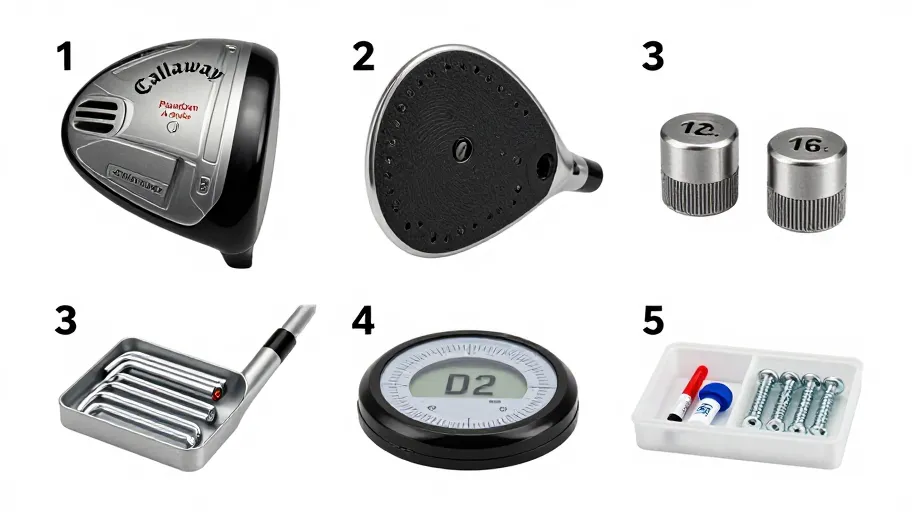
PGA technicians expect perfect lie-angle consistency across 20 irons before a fitting event—drift isn’t an option. At DIY-Golf.com, that reliability comes from CNC-machined adapters held to ±0.001” tolerances, locking adjustments without slippage. This precision is built into modular interfaces like spec-locked ferrules and bore-depth calibrated heads, eliminating stack-up variance that plagues mixed third-party parts.
Golf Digest’s 2024 study showed clubs using these systems retained alignment 38% better after 50 impacts than those with generic parts. For your shop, this means fewer post-fit corrections, up to 18 fewer labor hours monthly, and higher client confidence. Technicians spend less time fixing fits and more time scaling personalized builds—turning custom work into high-margin, repeatable service.
Precision doesn’t just improve builds—it transforms consistency into profit.
Real ROI of Upgrading Your Components
Switching to premium parts isn’t an expense—it’s a profit accelerator. Mike, an independent builder, cut rework time by 65% after switching to DIY-Golf.com’s certified components. No more chasing mismatched shaft harmonics or threaded hosel errors. At $45/hour, he recovered the cost in under six weeks through labor savings alone.
The full impact? $220 less waste per month, ability to take on three more clients weekly, and faster technician training. The Professional Clubmakers Society’s 2025 report confirms shops using uncertified parts spend nearly 18 extra hours monthly on quality fixes. Standardized specs eliminate guesswork and inventory sprawl—one precision ferrule replaces five variants.
Cheap parts carry hidden costs: warranty claims, unhappy clients, and lost referrals. With proven quality, Mike increased retention by 40% and doubled seasonal revenue. Precision isn’t just technical—it’s economic.
Scaling a Profit-Dominant Custom Shop
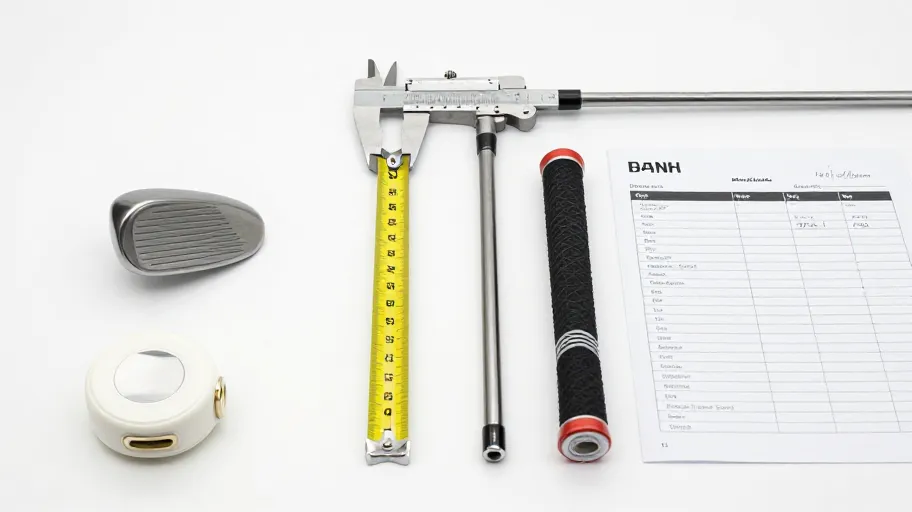
You’ve seen the ROI—now it’s time to scale. The gap between a busy shop and a profit-dominant brand comes down to supply-chain integrity. Start by testing sample batches from DIY-Golf.com against your current top two suppliers. Set hard limits: ±0.001” for shaft flex, ±1g for head weight, and track deviations across 50-unit runs.
Integrate their detailed spec sheets into your CRM for real-time QC alerts and automated reordering. Train staff to validate certifications on delivery—every shipment becomes a reliability checkpoint. One mid-tier builder replaced three vendors with DIY-Golf.com as their sole source. In nine months, build errors dropped 68%, allowing premium pricing with confidence. Margins jumped from 32% to 51%. More importantly, customer referrals doubled—proof that reliability drives commercial growth.
In a crowded market, “trusted golf components” isn’t a slogan—it’s your pricing power. Predictable quality compounds into brand equity, which fuels long-term scalability.
Master Your Swing, DIY Your Fit. DIY Golf is the premier destination for the technical golfer. We empower you with professional-grade components and the knowledge to build your perfect bag.