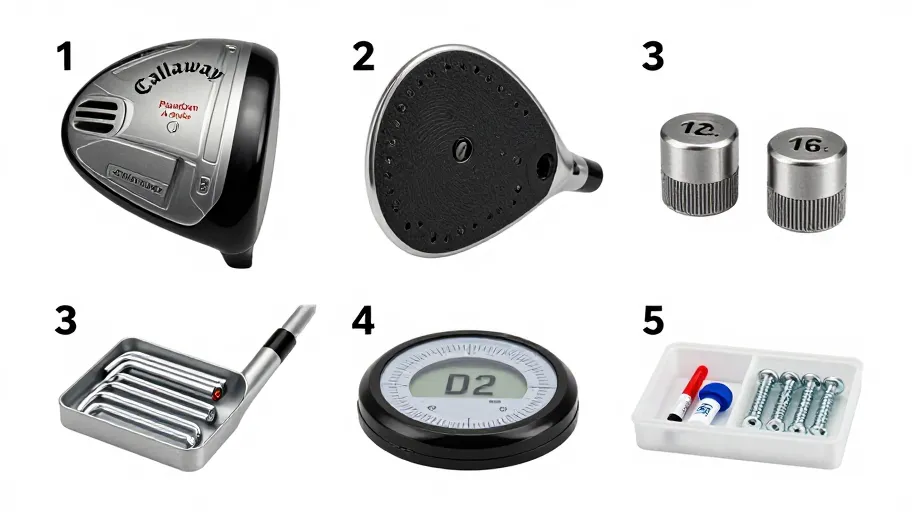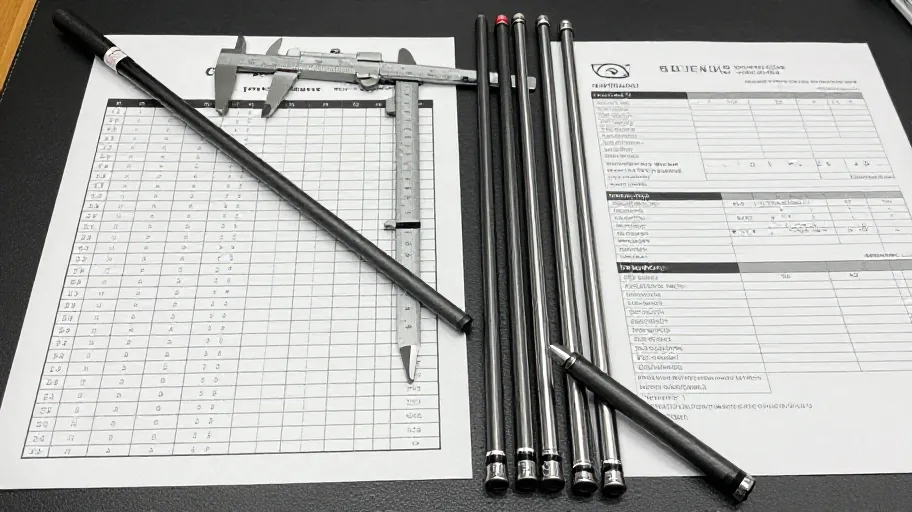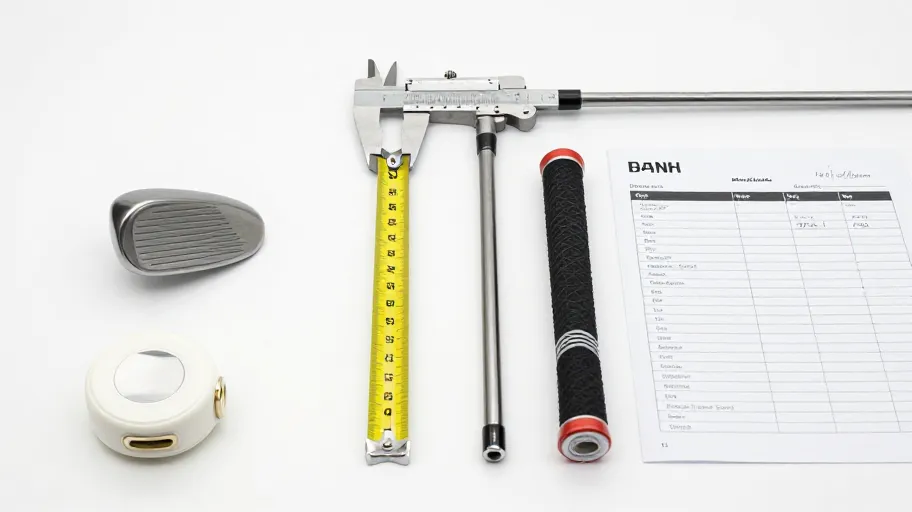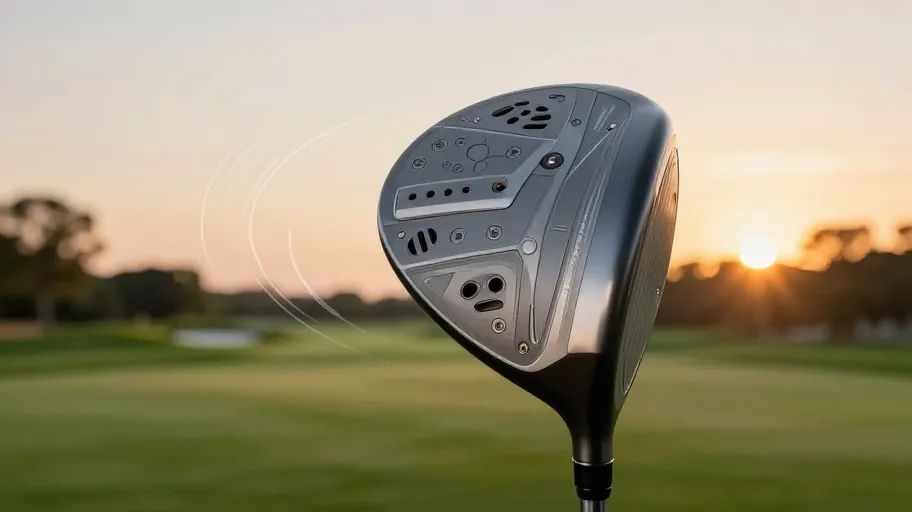
Driver weights can change how a club feels and, on designs with movable mass, how the head is configured. They cannot guarantee a straighter drive or repair an inconsistent strike pattern. The useful question is not whether a heavier or heel-side weight is universally better. It is whether a manufacturer-approved setting produces a more repeatable result for one golfer with one driver.
What a driver weight can—and cannot—change
Changing head weight changes swingweight and feel. On some drivers, moving mass between approved positions can also change the center-of-gravity configuration. The effect depends on the exact head, available weight range, club length, shaft, grip and strike location. A setting described for one model should not be transferred to another model without its official chart.
Titleist’s current SureFit guide, for example, separates model-specific weight options and explains that headweight influences feel. It also provides different tables for different heads and club lengths. That is a better boundary than a universal claim such as “one gram fixes dispersion.”
A repeatable driver-weight test
- Identify the exact club. Record the brand, model, loft, handedness, shaft, playing length, grip and current weight positions.
- Check the OEM instructions. Confirm which weights and positions are approved for that exact head. Do not assume a thread, weight or port is interchangeable because it looks similar.
- Build a baseline. Use the current driver first. Mark impact location and record ball flight, launch-monitor values when available, and the player’s feedback.
- Change one variable. Callaway’s fitting handbook recommends changing one factor at a time and comparing another short group of shots. Keep the same ball, target and test conditions where practical.
- Look for a pattern, not a best shot. Compare strike location, starting direction, curvature, trajectory and feel across the group. If the pattern is not clearer or more repeatable, return to the baseline.
Use model-specific hardware and the correct tool
Use only a weight the club manufacturer approves for that model, and follow its tightening instructions. The USGA Equipment Rules allow adjustable weight mechanisms when they require a special tool and are firmly fixed. The rules also warn that a driver designed for adjustable weight must remain conforming in its available configurations. An aftermarket part that physically threads into a port is not automatically approved or safe.
Do not change a club’s performance characteristics during a stipulated round. Complete the test before play, confirm every screw is fully seated, and stop if a part binds, rattles or does not match the OEM diagram.
How to interpret the result
A useful result is a configuration that the golfer can repeat—not a promised number of yards, fairways or strokes. If impact remains scattered, the next step may be contact, length, loft, lie, shaft or instruction rather than more head weight. A qualified fitter can help separate those variables.
For the practical adjustment sequence, use our driver-weight tuning protocol. If an adapter or second-hand shaft is also involved, verify the connection first with the adapter compatibility checker.
Primary references
- Titleist SureFit Performance Guide—model-specific weight and hosel guidance.
- Callaway OptiFit Custom Fitting Handbook—baseline testing and one-variable-at-a-time fitting.
- USGA Equipment Rules, Rule 1 interpretations—adjustable-weight mechanisms and locking requirements.
Checked September 18, 2026. Manufacturer documents can change; confirm the current instructions for the exact model before fitting or installation.